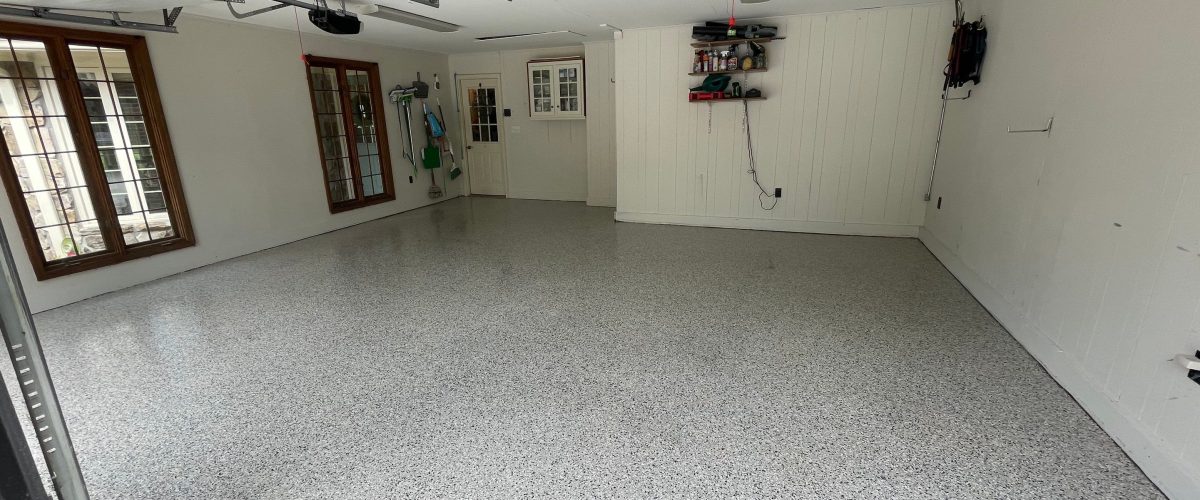
Garage Floor Coating Cost

How Much Does a Garage Floor Coating Cost in the Capital Region?

How Much Does a Garage Floor Coating Cost in the Capital Region?

A professionally installed garage floor coating in Albany and the Capital Region typically runs $4 to $12 per square foot, with most homeowners landing in the middle of that range once prep work is included. For a standard two-car garage in Albany, Saratoga, Schenectady, Troy, Clifton Park, or Latham, the total project cost is between $7,000 and $12,000. One-car garages usually cost between $3,000 and $6,000, and larger three-car garages can run $10,000 to $18,000 or more, depending on condition and the coating system you choose. Your exact number depends on square footage, the shape of your concrete, and the system you choose. Call 518543-7699 for a clear quote on your garage, valid for three months.

Typical Garage Floor Coating Cost by Size

Use these ranges as a starting point for planning your budget in Albany and the Capital Region:

Garage Size

Typical Square Footage

Price Range

1-car garage

250 to 300 sq ft

$3,000 to $6,000

2-car garage

400 to 600 sq ft

$7,000 to $12,000

3-car garage

750 to 900 sq ft

$10,000 to $18,000

Oversized or detached (1,000+ sq ft)

1,000+ sq ft

$8 to $12 per sq ft


These numbers assume a professional install with proper concrete prep, a full coating system, and a durable topcoat. A quote built around a quick paint-on epoxy kit will come in lower, but it will not hold up the same way under Upstate NY winters.

Why Capital Region Garages Cost What They Do

Coating a garage floor in Albany is a little different than coating one in Florida or Arizona. Our winters put concrete through a cycle that most regions never deal with, and that affects both the prep work and the system you actually need. Here is what drives the price locally:

  • Road salt and freeze-thaw damage. Salt-saturated slush tracks into your garage all winter. When that moisture soaks into untreated concrete and freezes, it pits and spalls the surface. Repairing that damage before coating takes time, and time drives cost.
  • Older concrete in older homes. Capital Region neighborhoods include a lot of mid-century homes with garage slabs that are 40, 50, or 60 years old. Older concrete usually needs more crack repair, joint filling, or surface leveling.
  • Labor standards in New York. Professional contractors in NY carry higher insurance, licensing, and material costs than contractors in lower-cost states. That flows through to your quote.
  • Travel to your job. If your garage is an hour outside the Capital Region, most installers factor drive time into the estimate.

Moisture from below. Garages built on grade can push moisture up through the slab. If a moisture test flags a problem, a vapor-blocking primer adds material and a step to the process.

Epoxy vs Polyaspartic Metallic Epoxy vs Flake Epoxy
63da307c309f263038699bd7 Commercial garage floors

What Coating System You Choose Changes the Price

Not every “epoxy floor” is the same product. The system you pick has a direct impact on cost, appearance, and how long your floor lasts.

  • Single-coat epoxy paint. The least expensive option. It looks nice for a season or two, then shows wear, hot-tire pickup, and peeling. Best skipped for a garage that sees real use.
  • Full epoxy coat with clear topcoat. A middle-tier install. Better adhesion and durability than paint. Expect to land near the lower end of the professional price range.
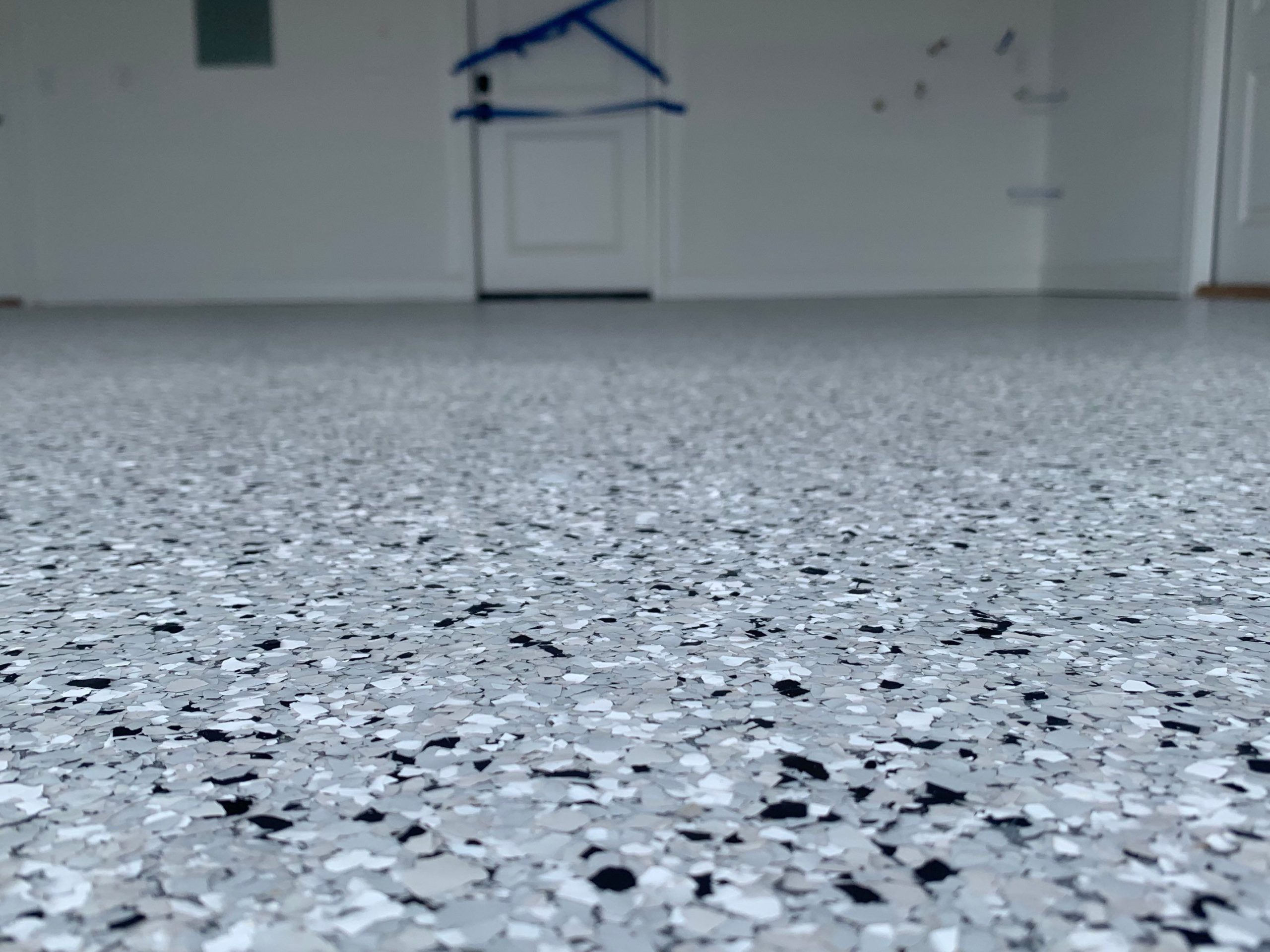
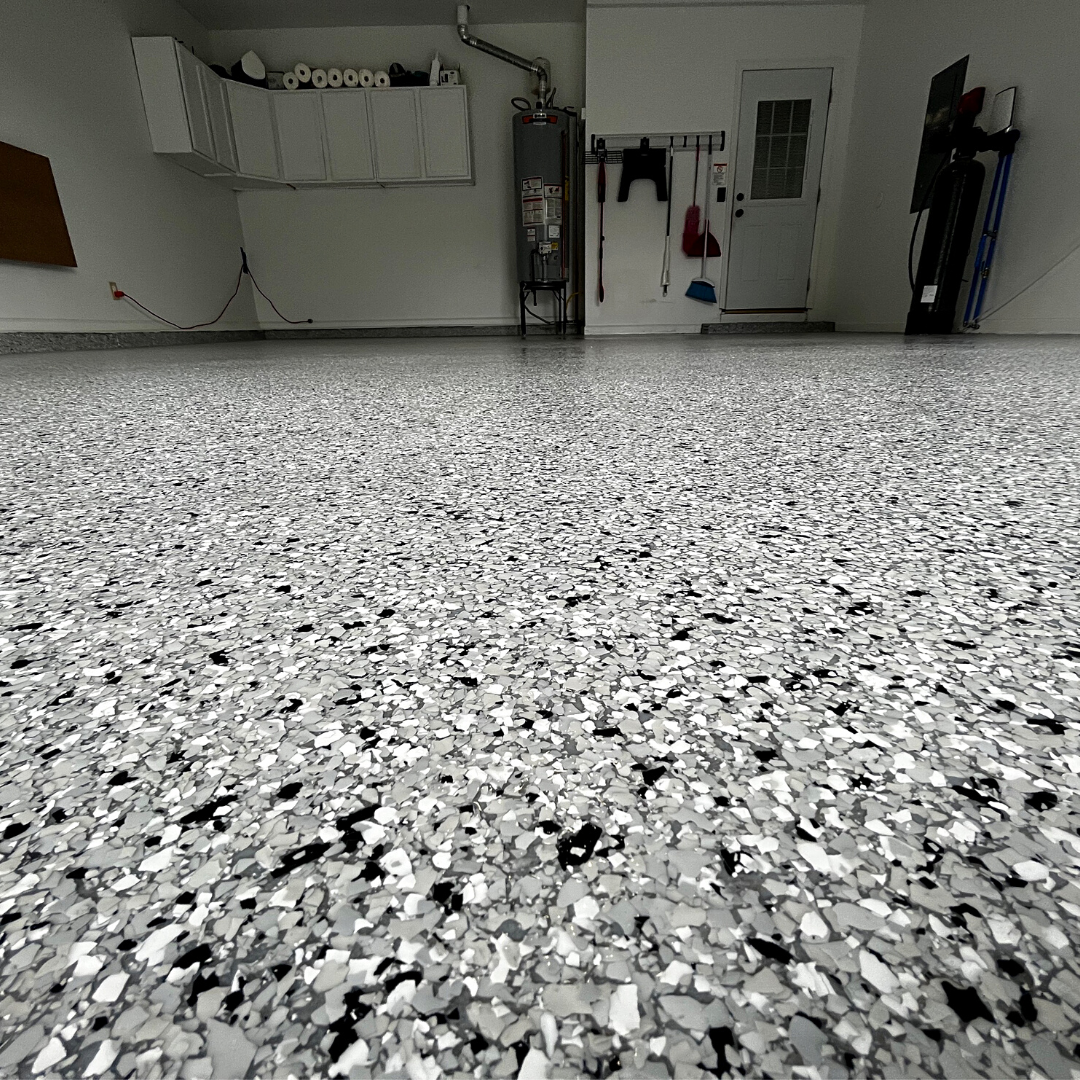
  • Flake floor with epoxy base and polyaspartic topcoat. Our flake floor system is the most popular choice in Capital Region garages. You get an epoxy body coat for bond strength, broadcast vinyl flake for texture and color, and a polyaspartic topcoat that resists UV, chemicals, and hot tires. This system sits in the middle to upper end of the price range and is the best long-term value for most garages.
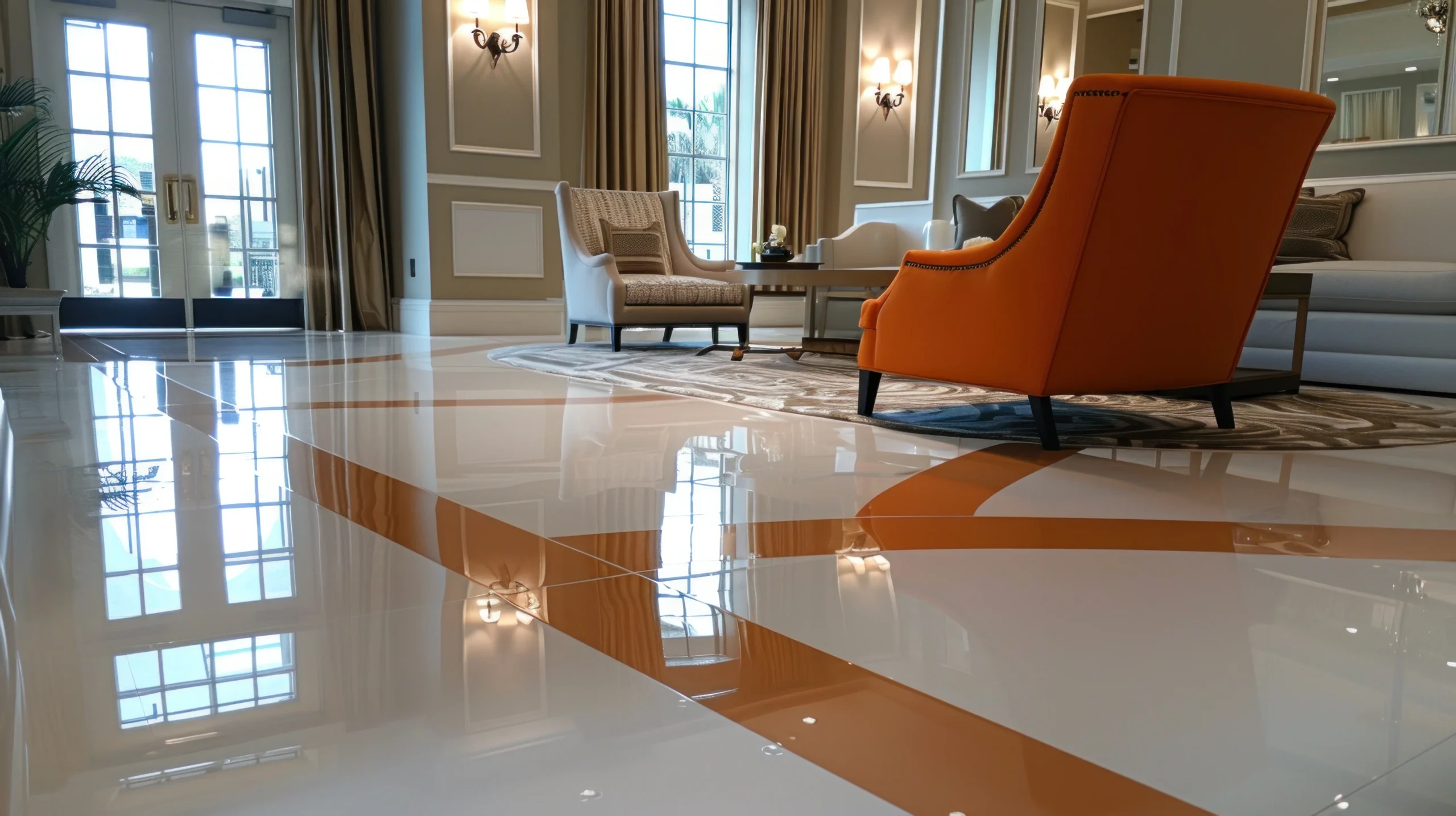
  • Metallic epoxy. A decorative system with swirled, reflective pigments. Priced toward the upper end because of the design work involved. Great for show garages and finished basements.

A flake floor with a polyaspartic topcoat costs more up front than a single-coat epoxy, and it lasts several times longer in a Capital Region winter. When people ask what the best value is, that is almost always the answer.

Prep Work Is Where Most of the Cost Hides

When two quotes for the same garage come in thousands of dollars apart, the difference is rarely the coating itself. It is the prep. Proper prep is what keeps your coating from peeling two winters from now, and it is the reason a well-installed floor actually lasts 15-plus years.

Typical prep items that affect your quote:

  • Diamond grinding the concrete to open the pores and remove old paint, sealers, or contaminants
  • Filling cracks, spalls, and pitting with structural patching compounds
  • Leveling low spots at door thresholds or floor drains
  • Stripping an old coating that is peeling or poorly bonded
  • Testing and treating for moisture if the slab is at risk
  • Removing existing tile or flooring if your garage has been finished

A garage with clean, sound concrete needs less prep, and the quote reflects that. A garage that has seen 20 salt-heavy winters will need more. 

Can You Coat a Garage Floor for Less?

Yes, and here is the honest tradeoff.

  • DIY kits from home improvement stores run $150 to $400 for a two-car garage. They are real coatings, but they are thin, usually water-based, and they do not include the grinder or the prep work that makes coatings last. Most DIY kits start peeling within two to three years in our climate.
  • Single-coat pro jobs without full prep can come in thousands below a full flake system. You save on day one and pay for it at year five when you hire someone to strip and recoat the floor.
  • Financing spreads the cost of a full professional install across monthly payments, which lets you get the long-lasting floor without a large up-front hit. We offer financing on Capital Region garage projects.

How to Get an Accurate Number for Your Garage

Cost ranges help you plan. A quote gives you the real number. Here is what most Capital Region installers, including us, need to give you an accurate price:

  1. Square footage of the garage. Length and width of the slab.
  2. Condition of the concrete. Cracks, pitting, old paint, stains, and moisture issues.
  3. System you want. Solid color, flake, or metallic, with your topcoat preference.
  4. Color and flake selection. You can browse our color chart before your quote.
  5. Timeline. Whether a one-day install works for your schedule.
  6. Access. Whether the garage is attached, detached, heated, or has anything that needs to be moved before work starts.

Most estimates take about 20 to 30 minutes in person, and ours stay valid for three months, which gives you time to plan around your schedule and budget.

Ready for a Real Number on Your Garage?

Call us for a quote on your garage in Albany, Saratoga, Schenectady, Troy, Clifton Park, Latham, or nearby areas. We prep concrete properly, install flake systems with an epoxy base and polyaspartic topcoat built for Capital Region winters, and back every job with our satisfaction guarantee. No minimum project size, financing available, and Spanish-speaking team members on staff.
Epoxy vs Polyaspartic Garage Floor Coatings: Which Lasts Longer in Upstate NY Winters?

Epoxy vs Polyaspartic Garage Floor Coatings: Which Lasts Longer in Upstate NY Winters?

Polyaspartic coatings last longer than epoxy in Upstate NY winters. Polyaspartic stays flexible in the cold, resists UV so it does not yellow, handles road salt and chemicals better, and cures fast enough that you can drive on it the next day. Epoxy is strong, but it is stiffer, yellows in sunlight, and cracks more easily through repeated freeze-thaw cycles. The best real-world answer is not one or the other, though. The longest-lasting garage and concrete floors in Albany, Saratoga, Schenectady, Troy, Clifton Park, and Latham use a full epoxy base coat for bond and build with a polyaspartic topcoat for durability and winter protection. That is the system we install at Epoxy Done Right. Call 518-543-7699 for a quote.

Epoxy vs Polyaspartic at a Glance

Category

Epoxy

Polyaspartic

Cold flexibility

Stiff, can crack

Flexible, resists cracking

UV resistance

Yellows and fades

Stays color-stable

Cure time

3 to 7 days to full cure

24 hours

Chemical and salt resistance

Good

Excellent

Scratch and abrasion

Good

Better

Cost up front

Lower

Higher

Cost over 10 years

Higher (recoats)

Lower (fewer recoats)

Best use

Base coat, indoor areas out of sunlight

Topcoat, outdoor-exposed areas, high-traffic floors

That table is the short version. Here is what it actually looks like on a Capital Region garage floor.

What Upstate NY Winters Do to a Floor Coating

Road salt and temperature swings are the real test. Any coating looks good on install day. The question is what it looks like after four winters. Capital Region floors deal with:

  • Salt-heavy slush drips off your car every time you pull in. Chloride is aggressive on coatings that are not built for it.
  • Freeze-thaw cycles, often several per week in late winter, expand and contract the concrete slab underneath your coating. A rigid coating cracks. A flexible one flexes with the slab.
  • Temperature swings from below zero in January to 85-plus in July. Coatings need to handle the full range without losing their bond.
  • UV exposure through garage door windows and on patios, driveways, and pool decks. UV breaks down coatings that are not UV-stable.
  • Hot tires after a highway drive. Hot-tire pickup is what causes coatings to lift right off the concrete when a car parks on them.

A coating that handles all five of those is what you actually want.

Epoxy vs Polyaspartic Metallic Epoxy vs Flake Epoxy
63da307c309f263038699bd7 Commercial garage floors

Epoxy: What It Is Good At and Where It Falls Short in Upstate NY

Epoxy is a two-part thermosetting resin that cures into a hard, dense film bonded to concrete. It has been the workhorse of the industry for decades, and it still has a place.

Where epoxy shines:

  • Excellent adhesion to properly prepped concrete, which is why it makes a great base coat
  • High film build, which fills small imperfections and hides minor pitting
  • Lower material cost
  • Strong compressive strength for heavy loads

Where epoxy struggles in Upstate NY:

  • Yellowing. Standard epoxy is not UV stable. Any area that sees sunlight through a garage window, or any outdoor application like a patio or pool deck, will amber and fade within a year or two.
  • Cracking in the cold. Epoxy is rigid. When your slab moves with freeze-thaw, a stand-alone epoxy topcoat can hairline-crack and eventually peel.
  • Slow cure. Full cure takes 3 to 7 days, which means your garage is out of service that whole time.
  • Hot tire pickup. Basic single-coat epoxy can lift under hot tires, which you will notice after a long summer drive home.

Epoxy is not a bad product. It is a bad choice as a final topcoat in a Capital Region garage.

Polyaspartic: Why It Outperforms in Our Climate

Polyaspartic is an aliphatic polyurea. That chemistry matters for two reasons: it cures fast, and it is UV stable. Those two properties alone make it a better fit for winter-heavy, salt-heavy Upstate New York.

Where polyaspartic shines:

  • Highly UV stable. It resists yellowing, chalking, and fading, even in direct sunlight. That matters for garages with windows, and it matters a lot for outdoor concrete like patios, porches, and pool decks.
  • Flexible under freeze-thaw. It moves with the concrete instead of cracking against it.
  • 24-hour full cure. You can walk on it the same evening and drive on it the next day. One-day installs are built on polyaspartic chemistry.
  • Strong chemical and salt resistance. Road salt, brake fluid, oil, and gasoline wipe up without staining.
  • Abrasion resistance. Holds up to daily foot traffic, rolling tool boxes, and hot tires without lifting.

Where polyaspartic is not the right pick:

  • Higher material cost. You pay more up front, though you pay it once.
  • Shorter working time. It sets fast, which is why installation needs an experienced crew. This is not a DIY product.
  • Not a great base coat by itself. Polyaspartic is a thin film. It does not fill pitting or minor imperfections the way epoxy does.

The Best Answer Is a System: Epoxy Base + Polyaspartic Top

Here is what most Upstate NY homeowners end up with when they talk to a professional: a full flake floor system built with both materials working together.

  • Epoxy base coat. Bonds to the prepped concrete, fills minor pitting, and gives the system its build. Broadcast vinyl flake is embedded into the wet epoxy for texture, color, and slip resistance.
  • Polyaspartic topcoat. Locks in the flake, resists UV, handles salt and chemicals, flexes with the slab, and cures fast.

You get the strengths of each chemistry exactly where they work best. The epoxy does what epoxy is good at (bond, build, adhesion). The polyaspartic does what polyaspartic is good at (UV stability, flexibility, chemical resistance, fast cure). You also get a floor that can be installed in a single day on most residential garages, thanks to the polyaspartic chemistry. More on that on our one-day install page.

A flake floor with an epoxy base and a polyaspartic topcoat is the system we install most often in the Capital Region. It lasts, it stays the color you chose, and it handles Upstate NY winters the way you want a floor to handle them.

What to Ask an Installer Before You Sign

Not every “epoxy floor” quote is the same coating, and not every “polyaspartic” quote is the real thing. Before you sign anything in Albany, Saratoga, Troy, Schenectady, Clifton Park, or Latham, ask:

  1. What is the base coat and what is the topcoat? A full flake system has both. A thin one-coat epoxy is not the same thing.
  2. Is the topcoat polyaspartic or polyurethane? They are not the same. Polyaspartic cures faster and holds up better in cold.
  3. What prep is included? Diamond grinding and crack repair are part of a long-lasting floor. Acid etching alone usually is not enough.
  4. How long until I can walk on it and drive on it? Polyaspartic systems are typically walk-on the same evening and drive-on in 24 hours.
  5. What warranty or guarantee is included? We back every install with a satisfaction guarantee.
  6. How does it perform in freeze-thaw? Any installer working in Upstate NY should have a direct answer.

If the answers feel vague, keep calling. You are spending real money on a floor that should last 15 years or more.

Ready for a Floor Built for Upstate NY Winters?

Contact us for a quote on your garage, basement, patio, or commercial floor in Albany, Saratoga, Schenectady, Troy, Clifton Park, Latham, Utica, or nearby areas. We install flake floors with an epoxy base and a polyaspartic topcoat built for Capital Region winters, most projects wrap in a single day, estimates stay valid three months, and financing is available. See color options on our color chart before your quote.


Meta Title: Epoxy vs Polyaspartic Garage Floor Coatings | Epoxy Done Right Meta Description: Polyaspartic vs epoxy floor coatings in Upstate NY. See which lasts longer through winter, salt, and freeze-thaw. Call 518-543-7699 for a quote. Suggested Slug: /blog/epoxy-vs-polyaspartic-garage-floor/ 

Garage Epoxy Flooring Latham, best time to epoxy a garage floor

Why Spring Is the Best Time to Coat Your Garage Floor in Albany

Spring (April through June) is the best time to epoxy a garage floor in Albany, NY. The temperature and humidity settle into the range coatings cure best in, the road salt from winter is gone, scheduling is easier before the summer rush, and you get the full warm-weather season to actually use the new floor.

Modern polyaspartic chemistry means we install garage floor coatings year-round in the Capital Region, including winter — but if you have flexibility on timing, spring is the sweet spot. Below is the full breakdown of why, what each season actually looks like for an Albany install, and how early you should be calling to lock in a spring date. If you’re still comparing systems, see our full ranking of garage floor coatings for Albany homes first. Call Epoxy Done Right at 518-543-7699 for a quote.

epoxy flooring burlington VT

Four Reasons Spring Is the Best Time to Epoxy a Garage Floor in Albany

1. The Temperature and Humidity Are in the Sweet Spot

Coatings cure best between 55 and 90 degrees F with moderate humidity. Albany springs deliver that range almost on autopilot. Late April through June, daytime temperatures sit between 55 and 80 most days, humidity is moderate, and rainfall is steady but not constant. That gives the coating system room to breathe during application and cure without fighting extreme heat, extreme cold, or the heavy humidity of July and August. The National Weather Service’s Albany climate data backs this up — spring is consistently the region’s most stable stretch for temperature and humidity swings.

2. The Salt and Slush Are Gone

By April, the road salt season in the Capital Region is winding down. By May it is over. Coating a floor right after the salt stops means the new finish gets six full months of clean conditions before it has to face the next winter. That first season is when the polyaspartic topcoat fully cures and seasons in, and a clean, salt-free environment is the best possible context for that.

Coating in November means the floor goes from cure to road salt almost immediately. It will still hold up, but spring gives the coating a genuinely easier start.

3. Scheduling Is Easier Before the Summer Rush

July and August are peak season for almost every concrete coating contractor in the Capital Region. Lead times stretch out, calendars fill, and the same window you could have had in May might be three or four weeks out by mid-summer. Calling in February or March for a May or June install almost always gets you the date you want.

4. You Get the Whole Warm Season to Use It

A floor coated in May is ready for the garage to be used hard for the next six months — spring cleaning, summer projects, fall organization, holiday prep. By the time winter rolls back around, the coating is fully cured, seasoned, and ready to take road salt without issues. A floor coated in October technically works, but you spend the first six months looking at it under a layer of slush.

What the Coating Actually Needs from the Weather

Every coating system, including the most modern polyaspartic, has a temperature and humidity window. Stay inside the window and the coating cures correctly, bonds tight, and looks the way it is supposed to look. Push the edges and you get cure problems.

The specifics for most professional systems:

  • Slab temperature: 50 to 90 degrees F
  • Ambient air temperature: 55 to 90 degrees F
  • Dew point margin: slab temperature must be at least 5 degrees above the dew point to avoid condensation forming under the coating
  • Humidity: ideally below 80 percent, lower is better

In the Capital Region, mid-April through mid-June hits all four targets the highest percentage of days. Late September through mid-October is a close second. Both are real windows — spring just edges out fall because of the salt timing and the season ahead.

How Each Season Plays Out for an Albany Garage Floor Coating

Season What to expect
Spring (Best) Temperature and humidity in range almost every day from late April on. Salt season over. Scheduling open. Six months of warm weather ahead. Garage doors can stay open during install for airflow without bugs or extreme heat.
Summer (Good with Caveats) Warm enough, but Albany summers can pull humidity into the 80s and 90s percent, especially July through mid-August. High humidity slows polyaspartic cure and can cause surface blush on epoxy. Mornings and evenings work better than mid-afternoon installs. Scheduling tightens as the season goes on.
Fall (Strong Runner-Up) September and early October are excellent — cool nights pull humidity down and slab temperature stays in range during the day. The risk is the rolling calendar: by late October, slab temperatures start dropping into the 40s overnight, and early frost can push the next morning’s slab below the cure threshold.
Winter (Year-Round with Polyaspartic) This is where polyaspartic chemistry matters. It cures across a much wider temperature range than standard epoxy, including down into the 30s and 40s if the slab is conditioned correctly. A heated garage, even temporarily heated with portable equipment, gives you cure conditions year-round. The tradeoff is giving up the salt-free first season and working around weather closures.

Why Polyaspartic Chemistry Changes the Conversation

Older epoxy-only systems had narrow windows: air temperature needed to sit between 60 and 80, slab over 55, humidity under 70 percent, and cure took 3 to 7 days at those conditions. That essentially limited installs to late spring and early fall in Upstate New York.

Polyaspartic topcoats cure in 24 hours, function across a much wider temperature band, and are far less humidity sensitive once down. It’s the chemistry that makes one-day installs possible and winter installs in heated garages routine. See how it stacks up against standard epoxy on our epoxy vs. polyaspartic breakdown.

That said, a wider cure window doesn’t mean every day is equal. Spring is still optimal — polyaspartic just removes the seasons-where-you-cannot-install problem, not the seasons-that-are-best problem.

How Early to Book for a Spring Install

Working backward from a desired install date:

  • For a May install: Call in February or early March
  • For a June install: Call by mid-April at the latest
  • For an April install: Call in January or early February

Our quotes stay valid for three months, so a quote written in February can hold for a May install without issue. That’s part of why we built the three-month window in the first place — it lets people plan an early-spring install while the weather is still locked in winter mode.

If your slab needs significant prep (an existing failed coating, heavy spalling, moisture issues that need testing), add an extra two to four weeks to the booking window so we can schedule the prep walkthrough and a full-day install.

What You Can Do Right Now to Be Ready

Whether you’re reading this in January planning ahead or in April ready to pull the trigger, a few steps help an install go smoothly:

  • Walk your garage and note the condition — cracks, spalling, peeling paint, oil stains, anywhere water has been getting in
  • Measure the slab — length and width, so we can write an accurate quote faster
  • Pick a color direction — browse our color and flake chart before the walkthrough; you don’t have to commit, but having a starting point speeds the conversation
  • Plan to clear the garage — the slab needs to be empty for grinding; ask about help moving heavy items when you call
  • Decide on financing or full pay up front — financing is available if you want to spread the cost across months

Frequently Asked Questions

What is the best time to epoxy a garage floor in Albany? Spring (April through June) — the temperature and humidity sit in the ideal cure range, road salt season is over, and you get six months of warm-weather use before the coating faces its first winter. Fall is a close second; winter installs are possible with polyaspartic systems and a heated garage.

Is spring really better than fall for garage floor coating in Albany? Both are strong windows, but spring edges out fall for two reasons: the road salt season is fully behind you going into summer, and you get six months of warm-weather use before the coating faces its first winter. Fall’s main risk is the calendar — the good window narrows fast as slab temperatures drop into the 40s by late October.

Can garage floor coating be done in an Albany winter? Yes, with polyaspartic systems and a heated garage (even temporarily heated with portable equipment). Polyaspartic cures across a much wider temperature range than standard epoxy. The tradeoff is that the floor doesn’t get a salt-free first season to cure into.

How much does garage floor coating cost in Albany? Cost depends on square footage, current slab condition, and the system chosen. See our full garage floor coating cost breakdown for current pricing ranges, or call for a free walkthrough quote.

How long does a garage floor coating installation take? Most residential garage floor coatings wrap in a single day, thanks to 24-hour polyaspartic cure times. Slabs needing significant prep — failed existing coatings, heavy spalling, moisture issues — may need an extra visit for prep work before the coating day.

Call to Lock in Your Spring Install

518-543-7699. We serve Albany, Saratoga, Schenectady, Troy, Clifton Park, Latham, Guilderland, Niskayuna, East Greenbush, Utica, and nearby areas across the Capital Region. We diamond grind every slab, install flake systems with an epoxy base and a polyaspartic topcoat built for Capital Region winters, and most installs wrap in a single day. Request a quote — quotes are valid for three months, which gives you time to plan around your schedule. Every install is backed by our satisfaction guarantee.

How to Clean Epoxy Floors: 7 Expert Maintenance Tips to Keep Them Looking New

How to Clean Epoxy Floors: 7 Expert Maintenance Tips to Keep Them Looking New

Cleaning epoxy floors does not need to be complicated. Stick with a simple routine, use the right products, and clean up messes quickly. Sweep every few days, mop with a mild solution once a week, and clean spills right away. Whether it is a garage or an interior space, this approach keeps your epoxy floors looking clean, smooth, and long-lasting.

A simple, consistent routine is what keeps epoxy floors looking their best year after year.

1. Sweep Regularly to Prevent Surface Damage

Dust and small debris might not seem like a big deal, but over time, they can leave fine scratches on the surface.

Use a soft broom or dust mop every few days to keep buildup under control. It is one of the easiest ways to protect the finish and maintain that clean, polished look.

2. Use a Gentle Cleaning Solution

When it comes to the best cleaner for epoxy floors, less is more. You do not need anything harsh to get great results.

Simple cleaning mix:

  • 2 to 3 ounces of ammonia per gallon of water
  • Apply with a microfiber mop
  • Rinse lightly if needed

This kind of solution lifts dirt without leaving behind residue or dulling the surface.

3. Mop Consistently for a Clean Finish

Once the loose dirt is gone, mopping brings the floor back to life.

Use warm water and a mild cleaner. There is no need to soak the floor. A damp mop will do the job and help maintain the coating without overdoing it.

4. Clean Spills as Soon as They Happen

Epoxy floors are resistant to stains, but that does not mean spills should sit for long.

Keep an eye out for:

  • Oil and grease
  • Chemicals
  • Winter salt and moisture

Wipe up spills with a soft cloth, then rinse the area. It only takes a minute and helps keep the surface looking fresh.

5. Avoid Harsh Chemicals and Abrasives

Some cleaners can do more harm than good.

Try to avoid:

  • High concentrations of vinegar
  • Citrus or acid-based cleaners
  • Soap-heavy products that leave a film
  • Rough scrubbers

Sticking with gentle epoxy floor cleaning products will help preserve the finish and extend the life of your floor.

6. Use Soft Tools to Protect the Surface

The tools you use matter just as much as the cleaner.

Go with:

  • Microfiber mops
  • Soft-bristle brooms
  • Gentle scrub pads

These options clean effectively without scratching or wearing down the topcoat.

7. Deep Clean Periodically to Maintain Shine

Regular cleaning handles most of the work, but a deeper clean every few months helps keep everything looking sharp.

Every few months:

  • Use a slightly stronger diluted solution
  • Lightly scrub areas that need extra attention
  • Rinse thoroughly

This helps remove any buildup and keeps the floor looking close to new.

How to Clean Epoxy Garage Floors

Garage floors usually take more abuse from vehicles, dirt, and changing weather.

For a clean epoxy garage floor:

  • Sweep or blow out dust and debris
  • Spot clean oil stains with a gentle degreaser
  • Mop with warm water and a mild cleaner
  • Rinse to clear away salt and residue

In the Capital Region of New York, seasonal changes can be tough on floors, so staying consistent really pays off.

Cleaning epoxy floors, Innovative Concrete Floor Solutions Niskayuna
About epoxy done right

What to Avoid When Cleaning Epoxy Floors

Avoiding a few common mistakes can make a big difference over time.

Do not:

  • Use steel wool or stiff brushes
  • Let dirt sit for long periods
  • Flood the floor with water
  • Apply wax or polish

Keeping things simple usually leads to better results.

How Long Epoxy Floors Last With Proper Maintenance

With the right care, epoxy floors can last for many years and still look great.

A lot of that comes down to how the floor was installed. Proper prep work and high-quality materials make cleaning easier and help the surface hold up over time.

Ricardo gomez angel rO6709B116E unsplash scaled

Frequently Asked Questions

Polished concrete is created by grinding the surface with increasingly fine diamond abrasives. The process results in a smooth, glossy finish with customizable levels of sheen and aggregate exposure.

Absolutely. Its durability, style, and low maintenance make it perfect for homes, offices, stores, restaurants, warehouses, and more.

Polished concrete is a cost-effective alternative to luxury flooring like hardwood or natural stone. Plus, it offers long-term savings thanks to its durability and minimal maintenance needs.

Maintenance is simple. Regular dust or wet mopping with a neutral pH cleaner is usually all it takes. There's no need for waxing or coatings—just clean spills promptly to prevent stains.

Get Professional Epoxy Flooring That’s Built to Last

If you want a floor that is easy to clean and holds its appearance, the installation process matters just as much as the maintenance.

Epoxy Done Right installs custom epoxy flooring using premium materials and detailed surface preparation to ensure long-term performance. Every project is handled with care and built for durability. We are serving Latham, Albany, Saratoga Springs, Clifton Park, Queensbury, Lake George, Kingston, and nearby areas.

Call 518-543-7699 to get started with epoxy flooring designed to look great and stay easy to maintain.

Epoxy Garage Floor Cost Guide 2026: What You’ll Actually Pay (+ Price Breakdown by Type)

Epoxy Garage Floor Cost Guide 2026: What You’ll Actually Pay (+ Price Breakdown by Type)

If you’re planning an epoxy garage floor in 2026, here’s what most homeowners actually pay: $4 to $12 per square foot, with a typical 2-car garage landing somewhere between $7,000 and $12,000 when installed professionally.

In Latham, Albany, and across the Capital Region, pricing often sits on the higher end. That comes down to labor standards and, more importantly, the level of prep work needed to make the floor last.

Quick cost snapshot:

Per square foot: $4 to $12
1-car garage: $3,000 to $6,000
2-car garage: $7,000 to $12,000
3-car garage: $10,000 to $18,000+

What really drives the price is not just the coating. It is the preparation underneath it.

Average Epoxy Garage Floor Cost in 2026

Pricing has become more consistent over the years, but there is still a noticeable range depending on how the floor is installed and what system you choose.

Typical price ranges:

Type of Installation

Cost Per Sq Ft

Typical Total (2-Car Garage)

DIY Epoxy Kit

$2 to $5

$1,000 to $3,000

Basic Professional

$5 to $7

$5,000 to $8,000

Mid-Range System

$7 to $10

$7,000 to $12,000

Premium System

$10 to $12+

$10,000 to $15,000+

Most professional installations include grinding, crack repair, multiple coating layers, and a protective topcoat. That extra work is what makes the floor hold up over time.

Garage floor cost great barrington

Epoxy Garage Floor Cost by Type

Not all epoxy floors are the same. The system you choose has a direct impact on both price and performance.

Solid Color Epoxy

  • Cost: $4 to $7 per sq ft
  • Look: Clean and uniform
  • Best for: Straightforward, functional garages

This is usually the most budget-friendly professional option.

Flake or Chip Epoxy Systems

  • Cost: $6 to $10 per sq ft
  • Look: Textured with multiple tones
  • Best for: Most residential garages

Flake systems are popular for a reason. They add grip and do a great job hiding small imperfections in the concrete.

Metallic Epoxy Floors

  • Cost: $9 to $12+ per sq ft
  • Look: Glossy, custom, high-end
  • Best for: Showrooms or standout spaces

These floors take more time and skill to install, which is why they cost mor

DIY Epoxy Kits

  • Cost: $2 to $5 per sq ft
  • Reality: Lower durability

DIY kits can save money upfront, but many start to show wear after a few years, especially if the prep work is limited.

What Actually Affects Epoxy Garage Floor Cost

A few key factors determine where your project will fall within the price range.

Surface Preparation

This is the part most people overlook, and it is the most important.

Proper prep includes:

  • Mechanical grinding
  • Crack and damage repair
  • Moisture testing
  • Deep cleaning

If the prep is not done right, the coating will not last.

This is why higher-quality installations cost more upfront.

Garage Size

Bigger garages cost more overall, but the price per square foot can sometimes drop slightly due to efficiency.

Condition of Existing Concrete

  • Cracks or pitting increase labor
  • Oil stains and moisture need extra treatment
  • Older concrete usually needs more prep

Coating System and Thickness

Thicker, multi-layer systems cost more but give you:

  • Better durability
  • Longer lifespan
  • Stronger resistance to wear and chemicals

Design and Customization

Custom colors, blends, and metallic finishes will raise both material and labor costs.

Cleaning epoxy floors, Innovative Concrete Floor Solutions Niskayuna

Real Epoxy Garage Floor Cost Examples

Here is what real projects often look like based on garage size.

1-Car Garage (200 to 300 sq ft)

  • Basic system: $3,000 to $5,000
  • Mid-range flake: $4,000 to $6,000

2-Car Garage (400 to 500 sq ft)

  • Basic system: $5,000 to $8,000
  • Flake system: $7,000 to $12,000
  • Metallic system: $9,000 to $14,000

3-Car Garage (600 to 800 sq ft)

  • Basic system: $3,000 to $5,000
  • Mid-range flake: $4,000 to $6,000

High-End Custom Garage

  • Decorative or metallic system
  • Extensive prep work

Typical range: $15,000 to $25,000+

DIY vs Professional Epoxy Garage Floor Cost

At first glance, DIY looks like the cheaper route. Over time, that is not always the case.

DIY Epoxy

  • Lower upfront cost
  • Limited prep
  • Often lasts around 3 to 5 years depending on use

Professional Installation

  • Higher upfront cost
  • Full prep and multi-layer system
  • Typically lasts 10 to 20 years with proper care

In many cases, the professional option ends up being the better value long term.

Latham
About epoxy done right

How to Get an Accurate Epoxy Floor Quote

No two garages are exactly the same, so pricing can vary even within the same neighborhood.

A proper quote should include:

  • A close look at the concrete condition
  • Accurate measurements
  • Moisture testing if needed
  • A clear plan for the finish and system

That way, you are getting a floor built specifically for your space.

Is Epoxy Flooring Worth the Cost?

For many homeowners, this is less about cost and more about what you get out of it.

You end up with:

  • A cleaner, more finished look
  • Easier maintenance
  • Strong resistance to stains and wear
  • A garage that feels more usable

Done right, it completely changes how your garage looks and functions.

Ricardo gomez angel rO6709B116E unsplash scaled

Frequently Asked Questions

Polished concrete is created by grinding the surface with increasingly fine diamond abrasives. The process results in a smooth, glossy finish with customizable levels of sheen and aggregate exposure.

Absolutely. Its durability, style, and low maintenance make it perfect for homes, offices, stores, restaurants, warehouses, and more.

Polished concrete is a cost-effective alternative to luxury flooring like hardwood or natural stone. Plus, it offers long-term savings thanks to its durability and minimal maintenance needs.

Maintenance is simple. Regular dust or wet mopping with a neutral pH cleaner is usually all it takes. There's no need for waxing or coatings—just clean spills promptly to prevent stains.

Get a Quote for Your Garage Floor

If you’re planning an epoxy garage floor in Latham, Albany, Saratoga Springs, Clifton Park, or anywhere in the Capital Region and nearby areas, the best next step is to get a professional evaluation of your space.

Epoxy Done Right takes the time to properly prepare your concrete, uses high-performance coating systems, and builds each floor around how you actually use your garage. That approach is what helps your floor last and look better over time.

Call (518) 543-7699 to schedule your consultation and get clear, honest pricing for your project.