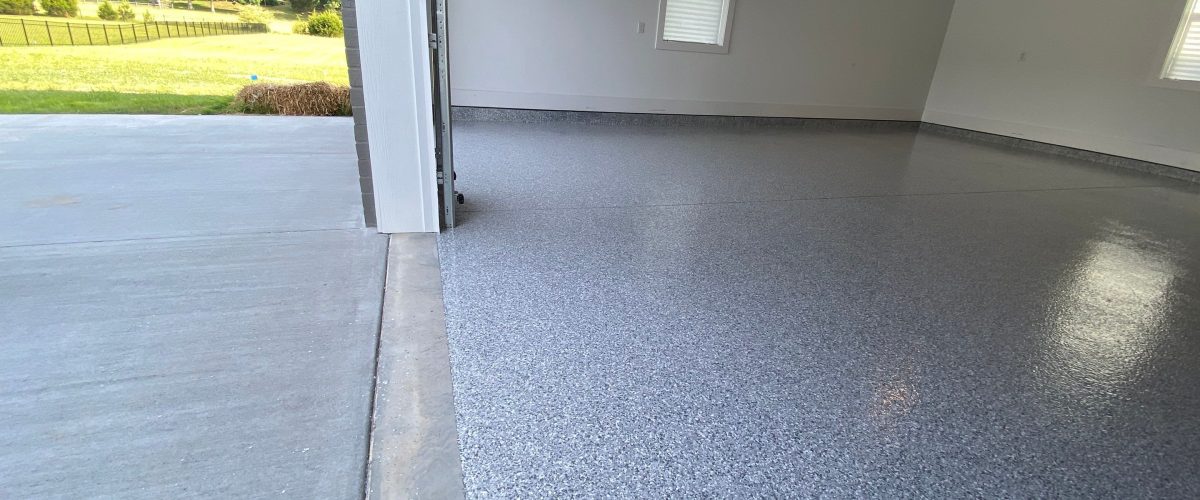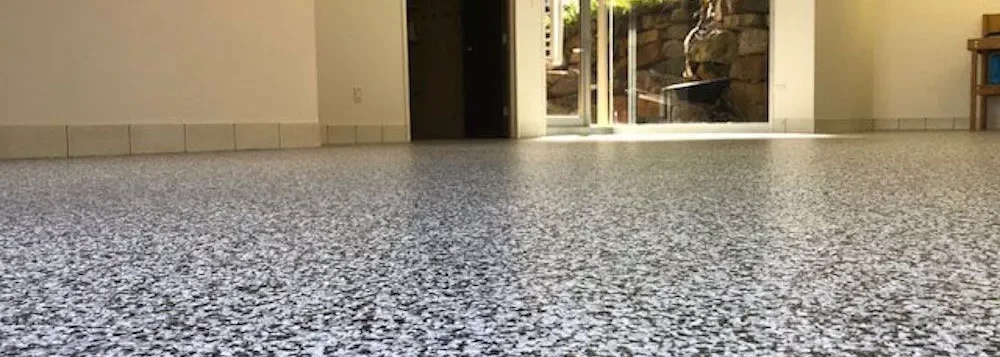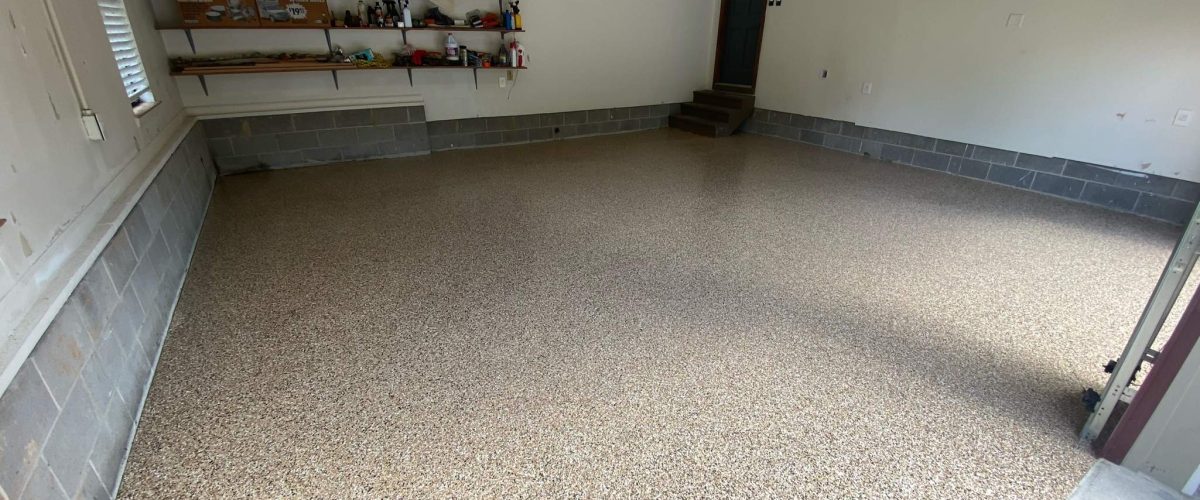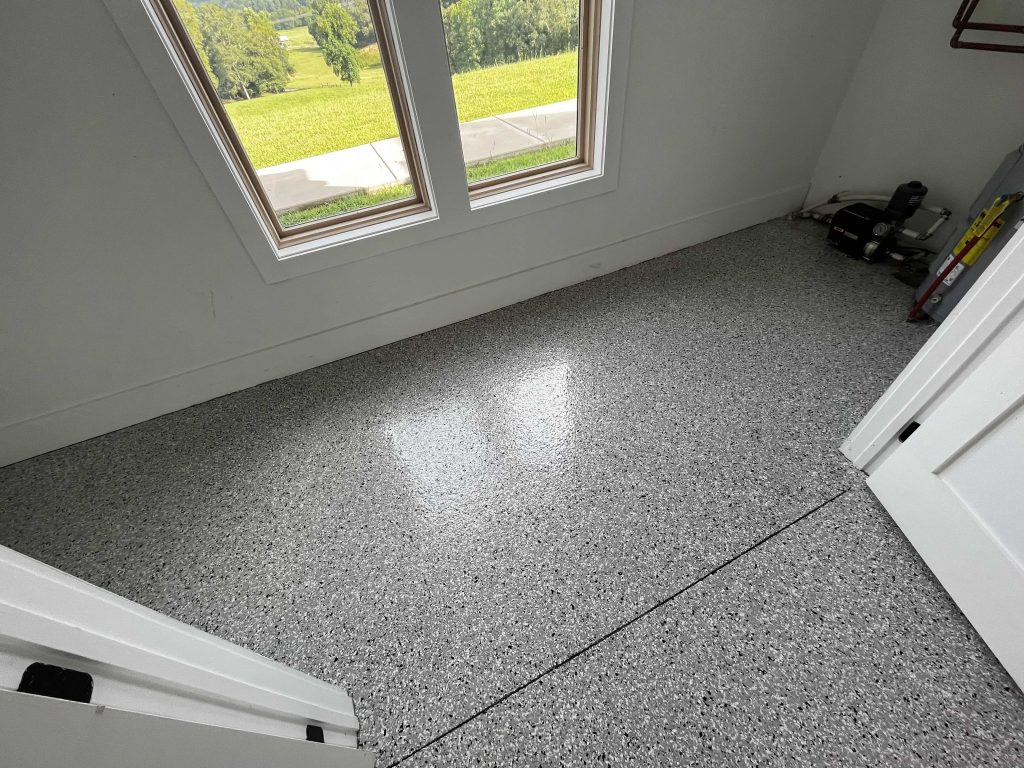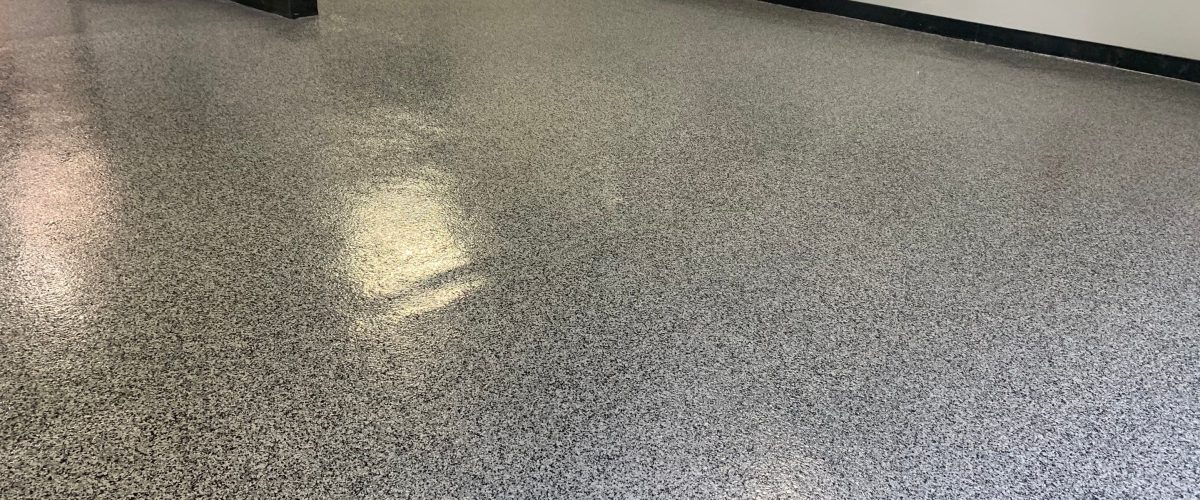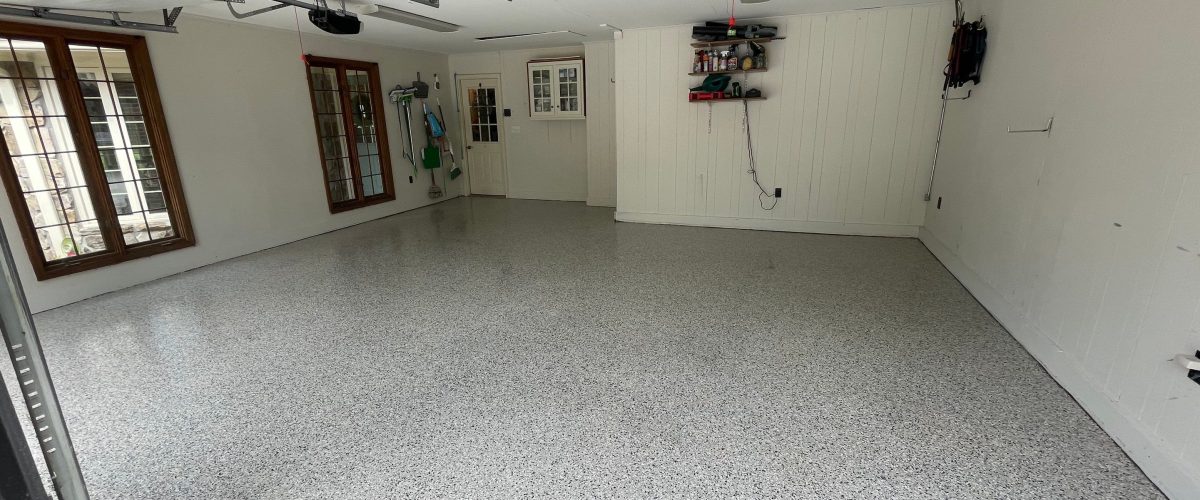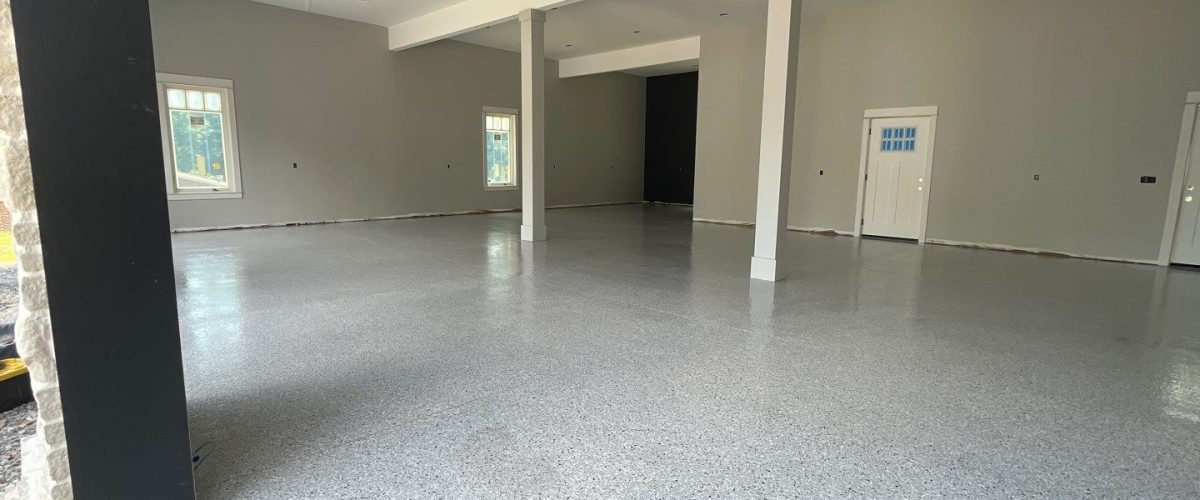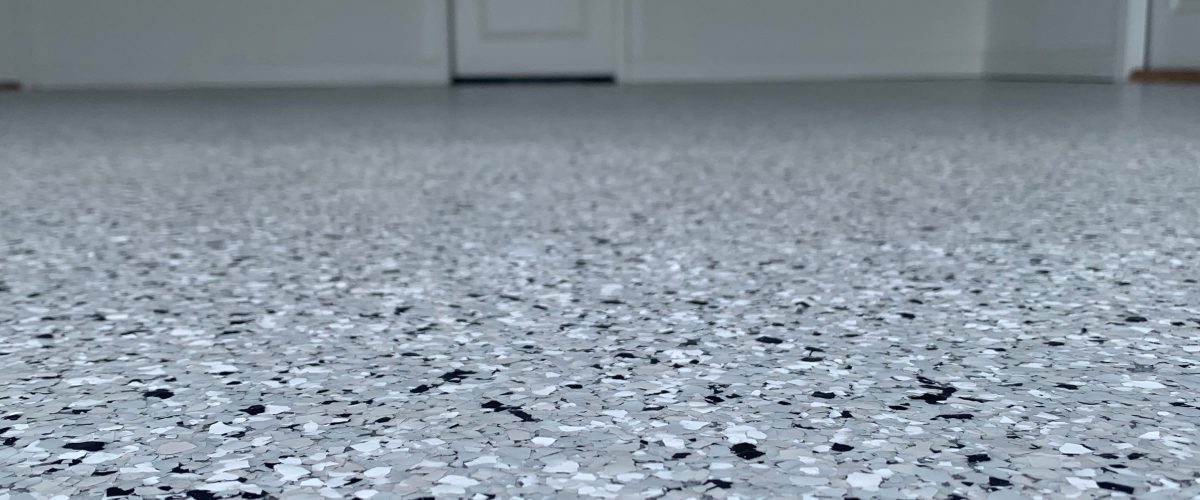
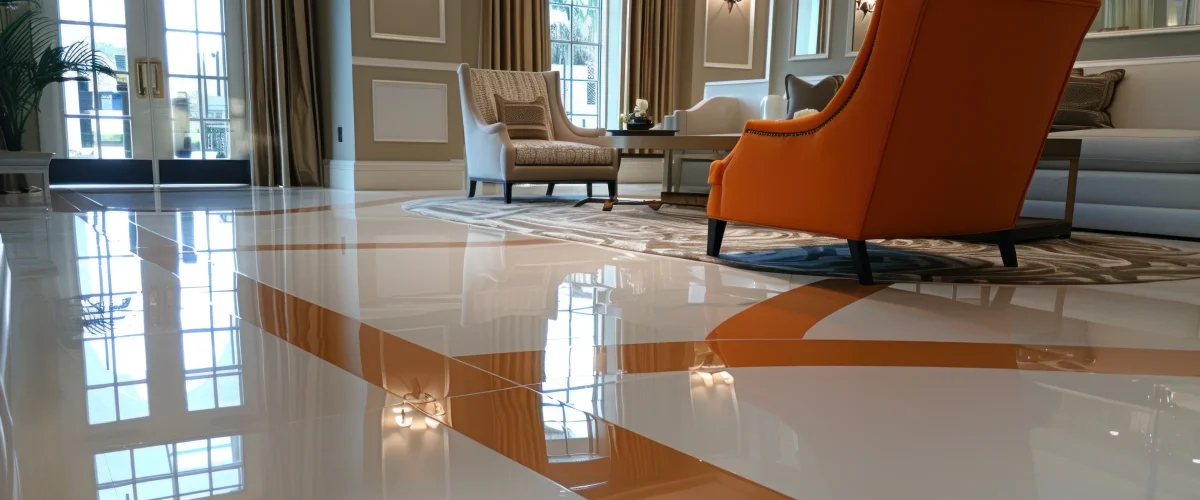
Black and white epoxy flake garage floor Guilderland Utica, NY

Do Epoxy Floors Yellow in Sunlight? The Truth About UV Damage

Bare epoxy can yellow in direct sunlight, but a professionally installed floor finished with a UV-stable topcoat resists it. The ambering people notice on an old garage or basement floor is almost always raw epoxy with no protective topcoat, or a DIY kit that skipped that layer. Standard epoxy resins are sensitive to ultraviolet light, so when UV hits them day after day they shift toward a yellow or amber tint. The fix is not to avoid epoxy, it is to cap it with a UV-stable topcoat such as a polyaspartic, which is built to hold its color in sunlight. Get that layer right and your floor keeps its true color for years, even in a sunny garage or a walkout basement.

Why Epoxy Yellows in the First Place

The color shift comes down to chemistry. Most standard epoxy is made from an aromatic resin, and aromatic compounds break down when exposed to ultraviolet light. As those bonds react to UV, the surface takes on a yellow or amber cast. This is often called ambering, and it happens gradually as sunlight builds up over weeks and months.

A few things are worth clearing up right away:

  • Yellowing is a surface issue, not a failure of the floor. The coating is still bonded and protecting the concrete; it has simply changed color.
  • It is driven by UV, not heat. A warm garage in the shade ambers far less than a cooler one that gets hours of direct sun.
  • Lighter and clear finishes show it most. A clear-coated or light gray floor reveals ambering that a dark charcoal floor might hide.

None of this means epoxy is the wrong choice. It means the topcoat matters as much as the base. Learn how the base layer works on our epoxy floor coatings page.

Where Yellowing Shows Up Most

UV ambering only happens where sunlight reaches the floor, so the risk is not the same in every room. In the Capital Region, the spots that see the most direct light are the ones to plan around.

  • Garages with the door open often or with south-facing windows that let in hours of afternoon sun
  • Walkout basements with glass doors and large windows
  • Sunrooms, patios, and porches where the coated surface sits in the open
  • Rooms with big windows that put a bright, moving patch of sun on the floor each day

A fully enclosed interior floor with little natural light has almost no UV exposure, so a standard finish there stays true. The floors that need UV-stable protection are the ones the sun actually touches.

What Actually Prevents Yellowing

The reliable answer is a UV-stable topcoat over the epoxy base. This is the layer that faces the sun, and choosing the right one is what keeps a floor from ambering.

  • UV-stable topcoats: These are formulated to resist the color shift that raw epoxy is prone to. On a professionally installed system, this protective topcoat is standard, not an upgrade you have to hunt for.
  • Polyaspartic topcoats: A polyaspartic layer is naturally UV-stable, holds its color in direct sunlight, and adds abrasion resistance on top. It is a strong pick for sunny garages and walkout basements. See how it works on our polyaspartic floor coatings page.

Epoxy Done Right finishes floors with UV-stable, moisture-resistant topcoats as part of the standard process, which is the difference between a floor that keeps its color and one that ambers in a season. Many of our sun-exposed installs use a polyaspartic finish, and it is a core part of our one-day floor coating installation

The truth in one line: Epoxy does not have to yellow. Raw epoxy left in the sun will amber, but the same floor capped with a UV-stable topcoat holds its color for years.

DIY Kits vs Professional Systems on UV

This is where most of the yellow floors come from. Big-box DIY epoxy kits are usually a single water-based epoxy coat with no UV-stable topcoat included. Rolled onto a sunny garage, that kind of floor can start ambering within a season, and there is no protective layer doing the work a topcoat should.

A professional system is built in layers: proper surface prep, a durable epoxy or hybrid base, decorative flake or color, and a UV-stable topcoat sized to the sun exposure of the space. That last layer is exactly what a kit leaves out, which is why a professionally coated sunlit floor behaves so differently over time. If you are weighing the difference for your own project, the finish and its longevity in daylight are a big part of the value.

Simple Habits That Help Any Floor

Once your floor has the right topcoat, a little routine care keeps it looking its best in a sunny space:

  •   Rinse away road salt and grit that can dull the surface over a Capital Region winter</li>
  •   Wipe up spills promptly so nothing sits and stains in a bright, warm spot</li>
  •   Use a light dust mop to keep abrasive debris off a high-gloss finish</li>
  •   Ask about a UV-stable topcoat by name for any garage, basement, or room that gets real sun</li>

Color and appearance over time is a common question for finished spaces too. If you are choosing a look for a sunlit basement, our comparison of metallic epoxy vs flake floors walks through which finish fits which room.

Do Epoxy Floors Yellow: Common Questions

Does polyaspartic yellow in the sun?

No. Polyaspartic is naturally UV-stable and holds its color in direct sunlight, which is why it is a strong topcoat choice for sunny garages, sunrooms, and walkout basements. It resists the ambering that raw epoxy is prone to and adds abrasion resistance on top.

Do interior epoxy floors yellow?

A fully enclosed interior floor with little natural light has almost no UV exposure, so a standard finish stays true over time. Yellowing is driven by ultraviolet light, so the rooms that need a UV-stable topcoat are the ones the sun actually reaches, like garages with the door open, sunrooms, and walkout basements.

Can you fix a yellowed epoxy floor?

In most cases, yes. A yellowed floor is a surface issue, not a bonding failure, so the fix is to prep the existing surface and apply a fresh UV-stable topcoat. The right approach depends on the floor’s condition, which is something we can assess during a consultation.

Want a Floor That Holds Its Color in the Sun?

If your garage door stays open all summer or your basement has walkout glass, the topcoat is the detail that decides whether your floor stays true or turns amber. Epoxy Done Right installs UV-stable epoxy and polyaspartic systems, uses premium-grade materials, and finishes every job with clean, organized job sites and a protective topcoat matched to your space.

We coat garages, basements, and patios throughout Albany, NY, Clifton Park, Saratoga Springs, and nearby Capital Region communities. Call 518-543-7699 to talk through UV-stable options and schedule a consultation.
Epoxy vs Polyaspartic Garage Floor Coatings in Colonie Hague

Metallic Epoxy vs Flake Floor Coatings: Which Looks Better in a Finished Basement?

When it comes to metallic epoxy vs flake floor options, both look great in a finished basement, so the better choice comes down to how you use the space and the style you are going for. Metallic epoxy gives you a glossy, three-dimensional finish with swirls of color and depth, which reads high-end and modern and works best in a basement you want to show off. Flake epoxy gives you a speckled, textured finish that hides dust and minor slab imperfections, adds grip underfoot, and stands up to heavy day-to-day use. For a media room, home bar, or basement office in the Capital Region, metallic usually wins on pure looks. For a gym, playroom, laundry, or all-purpose basement, flake tends to be the smarter pick. Many homeowners in the Albany area split the difference and use each system in the room that fits it best.

Metallic Epoxy vs Flake Floor Coatings at a Glance

FeatureMetallic EpoxyFlake Epoxy
LookGlossy, marbled, three-dimensional depthSpeckled, textured, decorative chips
Style fitModern, dramatic, showpiece spacesVersatile, casual to polished
Hides imperfectionsShows more of the slab surfaceExcellent at masking flaws and dust
Slip resistanceSmoother; add-on texture availableBuilt-in grip from the flake texture
Best roomsBar, media room, office, display areaGym, playroom, laundry, storage
MaintenanceSimple; shows dust on the glossVery forgiving between cleanings

Metallic Epoxy in a Basement: The Showpiece Look

A metallic epoxy basement floor is what you choose when you want the floor itself to be a feature. Metallic pigments move through the coating during installation, so no two floors come out the same. You get flowing patterns, color shifts, and a wet, reflective depth that can mimic polished stone, water, or molten metal depending on the blend.

Metallic finishes shine in finished basements built for entertaining and relaxing:

  • Home bars and lounges where the reflective gloss plays off lighting
  • Media and theater rooms that benefit from a rich, dark, dramatic base
  • Home offices and studios that want a clean, upscale, modern feel
  • Display and hobby spaces where the floor doubles as a design element

The tradeoff is that a high-gloss metallic surface is smoother and shows dust and footprints more readily than a textured floor, so it rewards a basement that stays fairly tidy. If you love the look but want more grip, a non-slip additive can be worked into the topcoat. You can see the full range of blends on our metallic epoxy floor coatings

Flake Epoxy in a Basement: The Practical Favorite

A flake epoxy basement floor uses decorative vinyl chips broadcast into the coating, then sealed under a clear topcoat. The result is a durable, speckled surface that reads clean and finished while doing a lot of practical work behind the scenes. Flake is the choice most Capital Region homeowners reach for when the basement earns its keep every day.

Flake systems are a strong fit for hard-working finished basements:

  • Home gyms that see dropped weights, sweat, and rolling equipment
  • Playrooms and family spaces where grip and durability matter
  • Laundry and utility zones that stay cleaner with a forgiving surface
  • Multi-use basements that combine several of the above

The flake texture hides dust, dirt, and small slab imperfections between cleanings, and the built-in grip helps on stairs and near sinks or laundry hookups. You also get a wide palette of flake blends to match trim, cabinetry, or a specific color scheme. Compare blends on our flake floor coatings

The short version:  Metallic epoxy is the head-turner. Flake epoxy is the workhorse. Pick metallic when the floor is part of the show, and flake when the basement needs to take a beating and still look good

What Upstate NY Basements Add to the Decision

Basements in the Albany, Saratoga, and greater Capital Region carry a few local realities worth planning around. Seasonal humidity, spring moisture, and the temperature swings that come with Upstate NY winters all put a slab through more than a main-floor room ever sees. That makes surface preparation and moisture handling matter as much as the finish you pick.

Both metallic and flake systems perform well below grade when the slab is properly ground, repaired, and coated with the right moisture-tolerant base. Flake floors have a small edge for basements prone to occasional dampness or spills near mechanicals, since the texture keeps footing sure even when the floor is not bone dry. A well-installed metallic floor handles the same conditions beautifully as long as the prep is done right and the space is used the way a showpiece floor should be.

Either way, the coating you see on top is only as good as the concrete work underneath it. Start with our basement floor coatings

Maintenance, Longevity, and Appearance Over Time

Both systems are built to last for years of normal basement use, resist stains and abrasion, and wipe clean with routine care. The difference shows up in daily upkeep and how each ages visually.

  • Metallic epoxy: Keeps its dramatic gloss with regular dust mopping and occasional damp cleaning. Because the surface is reflective, it looks its best when kept clear of grit and clutter.
  • Flake epoxy: Forgives longer stretches between cleanings, since the texture and color variation disguise dust and light wear. It is the easier floor to keep looking good with a busy household.

Color stability is another common question, especially for basements with big windows or walkout doors that let in daylight. If UV exposure and long-term color are on your mind, our guide on whether epoxy floors yellow in sunlight walks through what actually causes it and how the right topcoat protects the finish.

Metallic Epoxy vs Flake Floor Coatings: Common Questions

Is metallic or flake epoxy better for a basement?

It depends on how you use the room. Metallic epoxy is the better pick for showpiece spaces like home bars, media rooms, and offices where you want a glossy, high-end look. Flake epoxy is the better pick for hard-working rooms like gyms, playrooms, and laundry areas where grip and durability matter most.

Does metallic epoxy hide imperfections in a basement floor?

Not as well as flake. A metallic finish is smoother and more reflective, so it shows more of the slab surface along with dust and footprints. Flake epoxy is the stronger choice when you want to mask minor slab flaws and keep upkeep low between cleanings.

Do metallic and flake epoxy floors hold up in Upstate NY basements?

Yes. Both systems perform well below grade when the slab is properly ground, repaired, and coated with a moisture-tolerant base. Flake has a slight edge in basements prone to occasional dampness because its texture keeps footing sure even when the floor is not fully dry.

Talk Through Your Basement Floor With a Local Specialist

Not sure whether a metallic showpiece or a hard-wearing flake floor fits your space? Epoxy Done Right installs both, and we will walk your basement, look at how you use it, and recommend the system that matches your goals and your slab. Our team is known for meticulous surface prep, premium-grade materials, and clean, organized job sites from start to finish.

We coat finished basements throughout Albany, NY, Clifton Park, Saratoga Springs, and nearby Capital Region communities. Call 518-543-7699 to talk through metallic vs flake options and schedule a consultation.
Garage Floor Coating Cost

How Much Does a Garage Floor Coating Cost in the Capital Region?

How Much Does a Garage Floor Coating Cost in the Capital Region?

A professionally installed garage floor coating in Albany and the Capital Region typically runs $4 to $12 per square foot, with most homeowners landing in the middle of that range once prep work is included. For a standard two-car garage in Albany, Saratoga, Schenectady, Troy, Clifton Park, or Latham, the total project cost is between $7,000 and $12,000. One-car garages usually cost between $3,000 and $6,000, and larger three-car garages can run $10,000 to $18,000 or more, depending on condition and the coating system you choose. Your exact number depends on square footage, the shape of your concrete, and the system you choose. Call 518543-7699 for a clear quote on your garage, valid for three months.

Typical Garage Floor Coating Cost by Size

Use these ranges as a starting point for planning your budget in Albany and the Capital Region:

Garage Size

Typical Square Footage

Price Range

1-car garage

250 to 300 sq ft

$3,000 to $6,000

2-car garage

400 to 600 sq ft

$7,000 to $12,000

3-car garage

750 to 900 sq ft

$10,000 to $18,000

Oversized or detached (1,000+ sq ft)

1,000+ sq ft

$8 to $12 per sq ft


These numbers assume a professional install with proper concrete prep, a full coating system, and a durable topcoat. A quote built around a quick paint-on epoxy kit will come in lower, but it will not hold up the same way under Upstate NY winters.

Why Capital Region Garages Cost What They Do

Coating a garage floor in Albany is a little different than coating one in Florida or Arizona. Our winters put concrete through a cycle that most regions never deal with, and that affects both the prep work and the system you actually need. Here is what drives the price locally:

  • Road salt and freeze-thaw damage. Salt-saturated slush tracks into your garage all winter. When that moisture soaks into untreated concrete and freezes, it pits and spalls the surface. Repairing that damage before coating takes time, and time drives cost.
  • Older concrete in older homes. Capital Region neighborhoods include a lot of mid-century homes with garage slabs that are 40, 50, or 60 years old. Older concrete usually needs more crack repair, joint filling, or surface leveling.
  • Labor standards in New York. Professional contractors in NY carry higher insurance, licensing, and material costs than contractors in lower-cost states. That flows through to your quote.
  • Travel to your job. If your garage is an hour outside the Capital Region, most installers factor drive time into the estimate.

Moisture from below. Garages built on grade can push moisture up through the slab. If a moisture test flags a problem, a vapor-blocking primer adds material and a step to the process.

Epoxy vs Polyaspartic Garage Floor Coatings in Colonie Hague
63da307c309f263038699bd7 Commercial garage floors

What Coating System You Choose Changes the Price

Not every “epoxy floor” is the same product. The system you pick has a direct impact on cost, appearance, and how long your floor lasts.

  • Single-coat epoxy paint. The least expensive option. It looks nice for a season or two, then shows wear, hot-tire pickup, and peeling. Best skipped for a garage that sees real use.
  • Full epoxy coat with clear topcoat. A middle-tier install. Better adhesion and durability than paint. Expect to land near the lower end of the professional price range.
  • Flake floor with epoxy base and polyaspartic topcoat. Our flake floor system is the most popular choice in Capital Region garages. You get an epoxy body coat for bond strength, broadcast vinyl flake for texture and color, and a polyaspartic topcoat that resists UV, chemicals, and hot tires. This system sits in the middle to upper end of the price range and is the best long-term value for most garages.
  • Metallic epoxy. A decorative system with swirled, reflective pigments. Priced toward the upper end because of the design work involved. Great for show garages and finished basements.

A flake floor with a polyaspartic topcoat costs more up front than a single-coat epoxy, and it lasts several times longer in a Capital Region winter. When people ask what the best value is, that is almost always the answer.

Prep Work Is Where Most of the Cost Hides

When two quotes for the same garage come in thousands of dollars apart, the difference is rarely the coating itself. It is the prep. Proper prep is what keeps your coating from peeling two winters from now, and it is the reason a well-installed floor actually lasts 15-plus years.

Typical prep items that affect your quote:

  • Diamond grinding the concrete to open the pores and remove old paint, sealers, or contaminants
  • Filling cracks, spalls, and pitting with structural patching compounds
  • Leveling low spots at door thresholds or floor drains
  • Stripping an old coating that is peeling or poorly bonded
  • Testing and treating for moisture if the slab is at risk
  • Removing existing tile or flooring if your garage has been finished

A garage with clean, sound concrete needs less prep, and the quote reflects that. A garage that has seen 20 salt-heavy winters will need more. 

Can You Coat a Garage Floor for Less?

Yes, and here is the honest tradeoff.

  • DIY kits from home improvement stores run $150 to $400 for a two-car garage. They are real coatings, but they are thin, usually water-based, and they do not include the grinder or the prep work that makes coatings last. Most DIY kits start peeling within two to three years in our climate.
  • Single-coat pro jobs without full prep can come in thousands below a full flake system. You save on day one and pay for it at year five when you hire someone to strip and recoat the floor.
  • Financing spreads the cost of a full professional install across monthly payments, which lets you get the long-lasting floor without a large up-front hit. We offer financing on Capital Region garage projects.

How to Get an Accurate Number for Your Garage

Cost ranges help you plan. A quote gives you the real number. Here is what most Capital Region installers, including us, need to give you an accurate price:

  1. Square footage of the garage. Length and width of the slab.
  2. Condition of the concrete. Cracks, pitting, old paint, stains, and moisture issues.
  3. System you want. Solid color, flake, or metallic, with your topcoat preference.
  4. Color and flake selection. You can browse our color chart before your quote.
  5. Timeline. Whether a one-day install works for your schedule.
  6. Access. Whether the garage is attached, detached, heated, or has anything that needs to be moved before work starts.

Most estimates take about 20 to 30 minutes in person, and ours stay valid for three months, which gives you time to plan around your schedule and budget.

Ready for a Real Number on Your Garage?

Call us for a quote on your garage in Albany, Saratoga, Schenectady, Troy, Clifton Park, Latham, or nearby areas. We prep concrete properly, install flake systems with an epoxy base and polyaspartic topcoat built for Capital Region winters, and back every job with our satisfaction guarantee. No minimum project size, financing available, and Spanish-speaking team members on staff.

Best Garage Floor Coatings for Albany Epoxy Floor Coatings in Watervliet NY

Best Garage Floor Coatings for Albany, NY Homeowners

The best garage floor coatings for Albany, NY homes handle what Upstate winters actually throw at them — road salt, freeze-thaw cycles, hot tires, and UV from those rare but real summer days. For most homeowners here, that means a flake floor with an epoxy base coat and a polyaspartic topcoat. It installs in a single day, lasts 15-plus years with proper prep, and outperforms every other residential system in our climate. After that, your next best options are a solid colour polyaspartic for a clean modern look, metallic epoxy for show garages, quartz broadcast for working shops, and a single-coat epoxy if budget is the priority — though that last one comes with real tradeoffs in Albany conditions. Here is the full breakdown, plus what to ask any installer before you sign off on a quote. Call Epoxy Done Right at 518-543-7699 for a free quote on your garage.


Best Garage Floor Coatings for Albany, NY — Quick Rankings

  1. Flake floor with epoxy base and polyaspartic topcoat — Best overall for Albany homeowners
  2. Solid colour polyaspartic system — Best for a clean, contemporary look
  3. Metallic epoxy with polyaspartic topcoat — Best for show garages and finished spaces
  4. Quartz broadcast system — Best for heated workshops and high-impact use
  5. Single-coat epoxy — Least expensive professional option, shortest lifespan in our climate

1. Flake Floor with Epoxy Base and Polyaspartic Topcoat (Best Overall)

Ask ten reputable installers in the Capital Region what they put in their own garages, and most give you the same answer. This three-part system works because every layer has a job:

  • Epoxy base coat bonds tightly to properly prepped concrete and gives the floor its build
  • Broadcast vinyl flake adds colour, texture, and slip resistance
  • Polyaspartic topcoat locks the flake in, resists UV yellowing, and stays flexible through freeze-thaw

Why it wins for Albany: polyaspartic flexes with the slab when temperatures swing from -10 to 90°F — a normal year here. Road salt, brake fluid, oil, and petrol wipe up clean. The flake hides minor surface imperfections and gives you grip when you track snow in. Because polyaspartic cures fast, most attached two-car garages are walk-on the same evening and drive-on within 24 hours.

You can browse available flake colours on our colour chart before your quote — there are dozens of combinations that work well in Albany-area homes.

Best For

Attached garages, daily-driver homes, homeowners who want a floor that looks the same in year ten as it did on install day.

Tradeoff

Higher upfront cost than basic epoxy. You pay it once. See our garage floor coating cost guide for Albany if you want a detailed breakdown of what to budget.


2. Solid Colour Polyaspartic System (Best for a Clean, Modern Look)

If you want your garage to look like a finished commercial showroom rather than a textured residential floor, a solid colour polyaspartic system is the pick. No flake, no speckle — one colour, one continuous gloss surface. Our epoxy flooring page covers the full range of solid colour options we offer.

Why People Choose It

Modern aesthetic, easy to spot dropped hardware, and it photographs well for car enthusiasts.

Why It Ranks Below the Flake System

Solid surfaces show every scratch, scuff, and bit of debris more clearly. There is less built-in slip resistance unless aggregate is added, and any imperfections in the slab are more visible.

Best For

Homeowners who want a minimalist look and are willing to keep the floor clean.


3. Metallic Epoxy with Polyaspartic Topcoat (Best for Show Garages)

Metallic systems use reflective pigments suspended in an epoxy base, worked during install to create swirled, marbled, or pearl-like patterns. A polyaspartic topcoat goes over the top for UV protection and durability. According to This Old House, metallic epoxy is one of the fastest-growing residential flooring trends precisely because no two floors look the same — the swirl patterns are unique to each install.

Why People Choose It

Every metallic floor is one-of-one. Popular in show garages, finished basements, and homes where the garage is visible from the living space.

Why It Ranks Below Flake and Solid Colour

Higher cost, more involved install, and less practical for a daily-use garage that sees salt and slush every winter.

Best For

Show garages, finished basements, and garage conversions in Albany, Saratoga, and Loudonville-style homes where the space is part of the architecture.


4. Quartz Broadcast System (Best for Heated Workshops and High-Impact Use)

A quartz broadcast system uses coloured quartz aggregate instead of vinyl flake, broadcast heavy into the epoxy base. The result is a thicker, more textured floor with serious slip resistance and impact strength. You can see the full system breakdown on our quartz flooring page.

Why People Choose It

Quartz floors handle heavy abuse — dropped tools, dragged equipment, commercial-grade foot traffic. The texture also works well anywhere water regularly hits the floor.

Why It Ranks Below the Top Three for Most Homeowners

The aggressive texture is more than most residential garages need, and it is harder to clean than a flake floor. Cost is also higher.

Best For

Heated detached shops, working garages used by hobbyist mechanics, woodworkers, or fabricators, and any commercial-style space inside a residence.


5. Single-Coat Epoxy (Budget Option with Real Tradeoffs)

A single-coat epoxy install is what most low-priced garage floor quotes are referring to. It is a real product, applied professionally with prep included — just one coat instead of a full system.

Why Someone Might Pick It

The least expensive option in the professional range and looks fine on day one.

Why It Ranks Last

Albany winters expose the limits quickly. Standard epoxy is not UV stable, so sunlight will start to amber the finish. It is more rigid than polyaspartic, meaning freeze-thaw slab movement can cause cracking. Hot-tire pickup is more likely without a polyaspartic topcoat. Expect five to seven years of useful life in a daily-use Albany garage, compared to 15-plus years for a polyaspartic-topped flake floor. The Concrete Network notes that thin single-coat systems are among the most common sources of premature coating failure in cold climates — proper prep and a quality topcoat are what separate a floor that lasts from one that peels.

Best For

A detached garage that sees light use, a rental property, or a stopgap before a full install down the track.


What Actually Decides How Long Your Garage Floor Coating Lasts

Picking the right system matters. What matters more is what happens before the first coat goes down. Two contractors using identical products can produce floors that perform completely differently — because prep is the variable.

Questions to Ask Any Albany Garage Floor Installer

  • Are you diamond grinding the concrete or just acid etching it?
  • How are you handling cracks and pitting?
  • Are you testing for moisture before you coat?
  • What does your warranty or satisfaction guarantee actually cover?
  • Can you show me installs you have completed locally?

The reason a flake floor with a polyaspartic topcoat lasts 15-plus years is that the system is built right and the slab underneath is prepped right. Skip either step and the lifespan drops. For homeowners weighing systems and pricing side by side, our garage floor coating cost guide for the Capital Region walks through what each system typically runs and why quotes vary so much.


Ready to Choose the Right Garage Floor Coating for Your Albany Home?

Call Epoxy Done Right at 518-543-7699 for a quote on your garage in Albany, Saratoga, Schenectady, Troy, Clifton Park, Latham, Guilderland, or nearby areas. We install flake, solid colour, metallic, and quartz systems with epoxy bases and polyaspartic topcoats built for Capital Region winters. Most projects wrap in a single day. Browse our colour chart, ask about financing, and know that every estimate stays valid for three months. Satisfaction guarantee on every install.

Cleaning epoxy floors, Innovative Concrete Floor Solutions Niskayuna

10 Innovative Concrete Floor Solutions That Transform Your Space

Innovative concrete floor solutions give you durable, long-lasting surfaces that improve how your space looks and performs. Whether you want a high-performance garage floor in Albany, NY, a modern retail finish in Saratoga Springs, NY, or a clean industrial surface anywhere in Upstate New York, today’s systems offer strength, moisture protection, and custom design flexibility.

From polished concrete and decorative stains to metallic epoxy and microcement, you can choose a solution that fits your traffic levels, style goals, and maintenance expectations.

Epoxy Done Right installs premium concrete floor systems throughout Albany, the Capital Region, and surrounding areas of Upstate New York.

Polished Concrete for a Sleek, Modern Finish

Polished concrete is created by mechanically grinding and refining the surface until it reaches a smooth, glossy finish. The result is a clean, contemporary look that works well in homes and businesses across Upstate New York.

  • Retail stores
  • Offices
  • Basements
  • Modern homes

Why It Stands Out

  • High durability under foot traffic
  • Low maintenance requirements
  • Reflective surface that improves interior lighting
  • Long service life with proper care

Polished concrete is ideal when you want a minimalist aesthetic with long-term performance. See the full system on our polished concrete page. The Concrete Network notes that polished floors are easy to clean and eliminate the need for messy waxes or coatings, which keeps long-term maintenance costs down.

Stained Concrete for Rich, Permanent Colour

Stained concrete enhances your existing slab with deep, translucent colour. Acid and water-based stains penetrate the surface instead of sitting on top, which creates natural variation and depth.

Popular applications include:

  • Living rooms
  • Restaurants
  • Showrooms
  • Patios

Each stained floor develops unique tonal movement, giving your space a custom appearance.

Epoxy Floor Coatings for Maximum Durability

Epoxy flooring is one of the most reliable concrete floor solutions for residential and commercial environments throughout Upstate New York. It forms a seamless protective layer that bonds directly to properly prepared concrete.

Key Benefits

  • Resistance to chemicals and stains
  • Moisture protection
  • Easy cleaning
  • Strong impact resistance

Epoxy garage flooring is especially popular throughout Latham, Clifton Park, and Albany, NY because it handles vehicle traffic, road salt, and seasonal temperature changes common in Upstate New York. Browse the full range on our epoxy flooring page.

Metallic Epoxy for a High-Impact Finish

Metallic epoxy blends specialised pigments into the coating to create movement and depth. The result is a dramatic, high-end surface.

Ideal for:

  • Showrooms
  • Basements
  • Contemporary homes
  • Creative commercial spaces

The finished appearance can resemble marble or flowing stone, making it a statement feature within the space.

Decorative Flake Systems for Texture and Grip

Flake epoxy systems incorporate decorative vinyl chips into the coating to add texture and dimension.

Why It Works Well in Garages Across Upstate New York

  • Helps conceal minor surface imperfections
  • Adds traction
  • Delivers a clean, finished appearance
  • Performs well under heavy daily use

This system remains a top choice for garage floors throughout the Capital Region and surrounding Upstate New York communities because it balances durability and visual appeal. See our garage flooring page for the full breakdown.

Grind and Seal for Practical Surface Protection

Grind and seal improves concrete by mechanically smoothing the surface and applying a protective sealer.

Best suited for:

  • Warehouses
  • Utility spaces
  • Commercial storage areas

It enhances appearance while improving stain resistance and reducing concrete dust. Learn more on our grind and seal page.

Microcement for Thin Decorative Overlays

Microcement is a thin, cement-based coating applied over stable concrete and other prepared substrates.

Advantages

  • Minimal thickness
  • Seamless, modern appearance
  • Water-resistant properties
  • Suitable for floors and walls

Microcement works well for modern homes and commercial properties throughout Upstate New York when you want to update a space without removing the existing surface. Explore options on our microcement page.

Exposed Aggregate for Texture and Durability

Exposed aggregate reveals decorative stone within the concrete surface. This finish provides both texture and visual interest.

Common uses include:

  • Entryways
  • Outdoor patios
  • Commercial walkways

Its textured surface helps improve traction while maintaining strength in varied Upstate New York weather conditions.

Slip-Resistant Broom Finishes for Safety

Broom-finished concrete adds surface texture to help reduce slipping.

Ideal for:

  • Driveways
  • Sidewalks
  • Loading zones

This finish prioritises safety while maintaining long-term durability in residential and commercial properties across Upstate New York.

Heated Concrete Floors for Year-Round Comfort

Concrete slabs can be paired with radiant heating systems to provide even warmth throughout the space. When installed during new construction or major renovations, this system delivers consistent underfoot comfort.

Why Property Owners in Upstate New York Consider It

  • Even heat distribution
  • Comfortable surface during colder months
  • Works well in basements and garages

Radiant heated concrete floors can significantly improve winter comfort when incorporated into the overall building design. The U.S. Department of Energy confirms that radiant heating is generally more efficient than baseboard or forced-air heating because it eliminates duct losses.

Why Upgrade Your Concrete Floor?

Modern concrete floor solutions do more than improve appearance. They enhance how your space functions every day.

Key Advantages

  • Long-term durability
  • Moisture resistance
  • Simplified maintenance
  • Design flexibility
  • Increased property appeal

A properly installed system also protects your concrete from staining and surface wear.

The right floor improves how your space looks, performs, and feels every day.

How to Choose the Right Innovative Concrete Floor Solutions

To select the best option, consider:

  • Traffic levels. Heavy equipment and vehicles require high-performance coatings.
  • Moisture exposure. Basements and garages benefit from moisture-resistant systems.
  • Design goals. Metallic epoxy and stains create bold visual impact.
  • Maintenance expectations. Seamless systems are easier to clean and maintain.

A professional evaluation includes surface inspection, moisture testing, and preparation planning to ensure proper adhesion and long-term results. For garage-specific pricing, see our garage floor coating cost guide.

Frequently Asked Questions About Concrete Floor Solutions

What Is the Most Durable Concrete Floor Coating?

High-quality epoxy systems and professionally installed concrete coatings provide strong resistance to impact, chemicals, and abrasion when applied over properly prepared concrete.

Are Concrete Floor Coatings Good for Garages in Albany, NY?

Yes. Epoxy and flake systems are well-suited for garages in Albany, NY, and throughout Upstate New York because they resist road salt, moisture, and vehicle traffic common in the region.

How Long Do Concrete Floor Solutions Last?

Longevity depends on the system and usage conditions. Professionally installed epoxy and polished concrete floors can perform for many years with proper maintenance.

Schedule Your Concrete Floor Consultation Today

If you are ready to upgrade your garage, basement, or commercial property, Epoxy Done Right delivers precision installation and premium concrete floor solutions throughout Albany, Latham, Saratoga Springs, Clifton Park, Queensbury, Lake George, Kingston, and surrounding communities across Upstate New York.

As a locally owned company based in Latham, NY, you receive detailed surface preparation, high-quality materials, and clear communication from start to finish.

Call 518-543-7699 to schedule your consultation and discover the right concrete floor solution for your space.

Epoxy vs Polyaspartic Garage Floor Coatings: Which Lasts Longer in Upstate NY Winters?

Epoxy vs Polyaspartic Garage Floor Coatings: Which Lasts Longer in Upstate NY Winters?

Polyaspartic coatings last longer than epoxy in Upstate NY winters. Polyaspartic stays flexible in the cold, resists UV so it does not yellow, handles road salt and chemicals better, and cures fast enough that you can drive on it the next day. Epoxy is strong, but it is stiffer, yellows in sunlight, and cracks more easily through repeated freeze-thaw cycles. The best real-world answer is not one or the other, though. The longest-lasting garage and concrete floors in Albany, Saratoga, Schenectady, Troy, Clifton Park, and Latham use a full epoxy base coat for bond and build with a polyaspartic topcoat for durability and winter protection. That is the system we install at Epoxy Done Right. Call 518-543-7699 for a quote.

Epoxy vs Polyaspartic at a Glance

Category

Epoxy

Polyaspartic

Cold flexibility

Stiff, can crack

Flexible, resists cracking

UV resistance

Yellows and fades

Stays color-stable

Cure time

3 to 7 days to full cure

24 hours

Chemical and salt resistance

Good

Excellent

Scratch and abrasion

Good

Better

Cost up front

Lower

Higher

Cost over 10 years

Higher (recoats)

Lower (fewer recoats)

Best use

Base coat, indoor areas out of sunlight

Topcoat, outdoor-exposed areas, high-traffic floors

That table is the short version. Here is what it actually looks like on a Capital Region garage floor.

What Upstate NY Winters Do to a Floor Coating

Road salt and temperature swings are the real test. Any coating looks good on install day. The question is what it looks like after four winters. Capital Region floors deal with:

  • Salt-heavy slush drips off your car every time you pull in. Chloride is aggressive on coatings that are not built for it.
  • Freeze-thaw cycles, often several per week in late winter, expand and contract the concrete slab underneath your coating. A rigid coating cracks. A flexible one flexes with the slab.
  • Temperature swings from below zero in January to 85-plus in July. Coatings need to handle the full range without losing their bond.
  • UV exposure through garage door windows and on patios, driveways, and pool decks. UV breaks down coatings that are not UV-stable.
  • Hot tires after a highway drive. Hot-tire pickup is what causes coatings to lift right off the concrete when a car parks on them.

A coating that handles all five of those is what you actually want.

Epoxy vs Polyaspartic Garage Floor Coatings in Colonie Hague
63da307c309f263038699bd7 Commercial garage floors

Epoxy: What It Is Good At and Where It Falls Short in Upstate NY

Epoxy is a two-part thermosetting resin that cures into a hard, dense film bonded to concrete. It has been the workhorse of the industry for decades, and it still has a place.

Where epoxy shines:

  • Excellent adhesion to properly prepped concrete, which is why it makes a great base coat
  • High film build, which fills small imperfections and hides minor pitting
  • Lower material cost
  • Strong compressive strength for heavy loads

Where epoxy struggles in Upstate NY:

  • Yellowing. Standard epoxy is not UV stable. Any area that sees sunlight through a garage window, or any outdoor application like a patio or pool deck, will amber and fade within a year or two.
  • Cracking in the cold. Epoxy is rigid. When your slab moves with freeze-thaw, a stand-alone epoxy topcoat can hairline-crack and eventually peel.
  • Slow cure. Full cure takes 3 to 7 days, which means your garage is out of service that whole time.
  • Hot tire pickup. Basic single-coat epoxy can lift under hot tires, which you will notice after a long summer drive home.

Epoxy is not a bad product. It is a bad choice as a final topcoat in a Capital Region garage.

Polyaspartic: Why It Outperforms in Our Climate

Polyaspartic is an aliphatic polyurea. That chemistry matters for two reasons: it cures fast, and it is UV stable. Those two properties alone make it a better fit for winter-heavy, salt-heavy Upstate New York.

Where polyaspartic shines:

  • Highly UV stable. It resists yellowing, chalking, and fading, even in direct sunlight. That matters for garages with windows, and it matters a lot for outdoor concrete like patios, porches, and pool decks.
  • Flexible under freeze-thaw. It moves with the concrete instead of cracking against it.
  • 24-hour full cure. You can walk on it the same evening and drive on it the next day. One-day installs are built on polyaspartic chemistry.
  • Strong chemical and salt resistance. Road salt, brake fluid, oil, and gasoline wipe up without staining.
  • Abrasion resistance. Holds up to daily foot traffic, rolling tool boxes, and hot tires without lifting.

Where polyaspartic is not the right pick:

  • Higher material cost. You pay more up front, though you pay it once.
  • Shorter working time. It sets fast, which is why installation needs an experienced crew. This is not a DIY product.
  • Not a great base coat by itself. Polyaspartic is a thin film. It does not fill pitting or minor imperfections the way epoxy does.

The Best Answer Is a System: Epoxy Base + Polyaspartic Top

Here is what most Upstate NY homeowners end up with when they talk to a professional: a full flake floor system built with both materials working together.

  • Epoxy base coat. Bonds to the prepped concrete, fills minor pitting, and gives the system its build. Broadcast vinyl flake is embedded into the wet epoxy for texture, color, and slip resistance.
  • Polyaspartic topcoat. Locks in the flake, resists UV, handles salt and chemicals, flexes with the slab, and cures fast.

You get the strengths of each chemistry exactly where they work best. The epoxy does what epoxy is good at (bond, build, adhesion). The polyaspartic does what polyaspartic is good at (UV stability, flexibility, chemical resistance, fast cure). You also get a floor that can be installed in a single day on most residential garages, thanks to the polyaspartic chemistry. More on that on our one-day install page.

A flake floor with an epoxy base and a polyaspartic topcoat is the system we install most often in the Capital Region. It lasts, it stays the color you chose, and it handles Upstate NY winters the way you want a floor to handle them.

What to Ask an Installer Before You Sign

Not every “epoxy floor” quote is the same coating, and not every “polyaspartic” quote is the real thing. Before you sign anything in Albany, Saratoga, Troy, Schenectady, Clifton Park, or Latham, ask:

  1. What is the base coat and what is the topcoat? A full flake system has both. A thin one-coat epoxy is not the same thing.
  2. Is the topcoat polyaspartic or polyurethane? They are not the same. Polyaspartic cures faster and holds up better in cold.
  3. What prep is included? Diamond grinding and crack repair are part of a long-lasting floor. Acid etching alone usually is not enough.
  4. How long until I can walk on it and drive on it? Polyaspartic systems are typically walk-on the same evening and drive-on in 24 hours.
  5. What warranty or guarantee is included? We back every install with a satisfaction guarantee.
  6. How does it perform in freeze-thaw? Any installer working in Upstate NY should have a direct answer.

If the answers feel vague, keep calling. You are spending real money on a floor that should last 15 years or more.

Ready for a Floor Built for Upstate NY Winters?

Contact us for a quote on your garage, basement, patio, or commercial floor in Albany, Saratoga, Schenectady, Troy, Clifton Park, Latham, Utica, or nearby areas. We install flake floors with an epoxy base and a polyaspartic topcoat built for Capital Region winters, most projects wrap in a single day, estimates stay valid three months, and financing is available. See color options on our color chart before your quote.


Meta Title: Epoxy vs Polyaspartic Garage Floor Coatings | Epoxy Done Right Meta Description: Polyaspartic vs epoxy floor coatings in Upstate NY. See which lasts longer through winter, salt, and freeze-thaw. Call 518-543-7699 for a quote. Suggested Slug: /blog/epoxy-vs-polyaspartic-garage-floor/ 

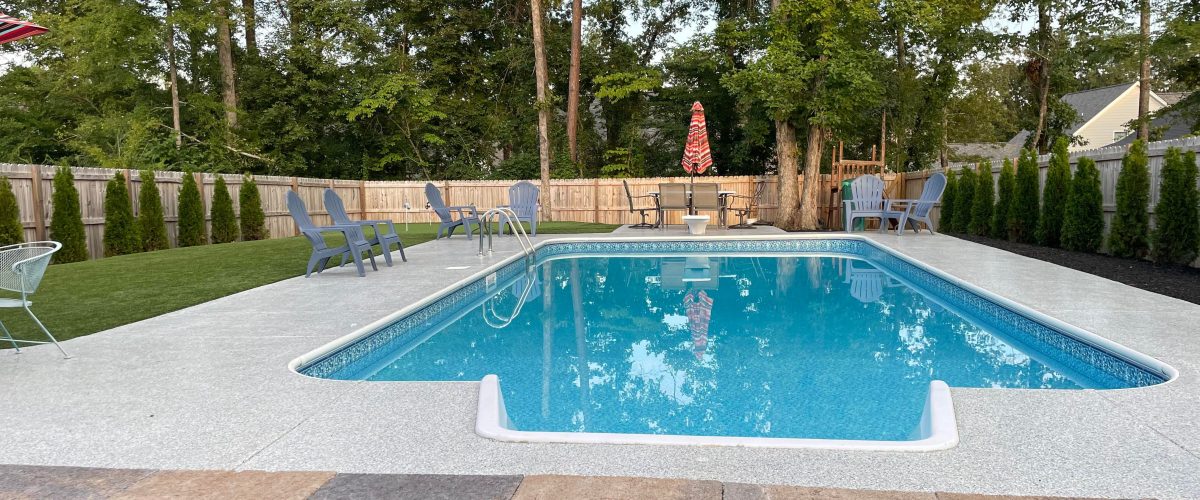
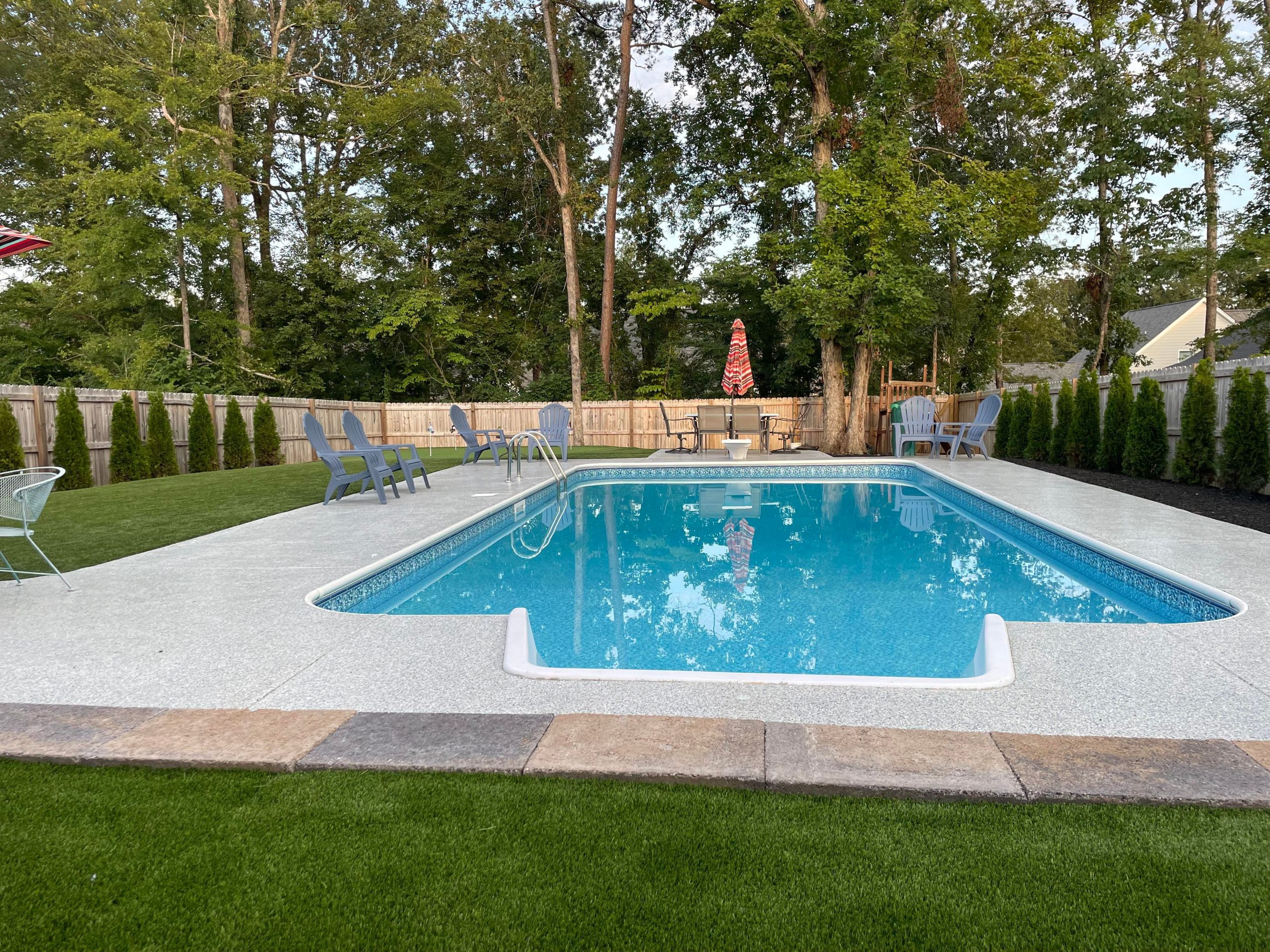
Pool Deck Coating

Pool Deck Coatings That Survive Albany Summers and Winters

Choosing the right pool deck coating matters more in the Capital Region than almost anywhere else. An Albany pool deck has to survive direct UV all summer, pool chemistry every weekend, freeze-thaw cycles all winter, road salt drift from the driveway, and the daily weight of furniture, planters, and foot traffic. The coating that handles all of that without yellowing, cracking, or turning slick is a polyaspartic-topped flake or quartz broadcast system installed over diamond-ground concrete.

It’s UV stable, flexible enough to move with freeze-thaw, slip-resistant when wet, chemical-resistant against chlorine and salt water, and built to last 15-plus years in Capital Region conditions. Below is what an Albany pool deck has to deal with, which coating systems actually hold up, and what makes the difference between a deck that looks great in year ten and a deck that needs to be redone in year three.

Call Epoxy Done Right at 518-543-7699 for a free quote on your pool deck coating.


Pool Deck Coating

What an Albany Pool Deck Has to Survive

Pool decks in the Capital Region see five distinct stressors in a calendar year. A coating that handles four of them and fails on the fifth is not the right coating.

  • Direct UV all summer. A south-facing deck in Latham can hit 130-plus degrees on a July afternoon. Standard epoxy yellows and chalks under that exposure, often within a single season.
  • Pool chemistry. Chlorine, salt-water pool brine, algaecides, pH adjusters, and the splash and drip of all of it onto the deck day after day. Coatings without real chemical resistance break down.
  • Freeze-thaw cycles all winter. Capital Region winters put pool decks through dozens of expansion and contraction cycles. Rigid coatings crack. Flexible ones flex.
  • Road salt drift. Snow blowing in from the driveway, salt-saturated boots tracking across the deck during spring opening, salt water from a saltwater pool. All of it attacks coatings that are not chloride-resistant.
  • Weight, traffic, and impact. Loungers, tables, planters full of soil, kids running, dropped flip flops, the occasional grill rolled across the deck. The coating has to take the wear without scuffing or telegraphing.

The system that handles all five at once is a flake or quartz broadcast in an epoxy base coat, sealed with a polyaspartic topcoat.

Pool Deck Coating Systems That Actually Work in the Capital Region

Polyaspartic-Topped Flake System

The most common pick for residential pool deck coating in Albany. Vinyl flake is broadcast into a wet epoxy base coat, then sealed with a polyaspartic topcoat. The flake provides color depth, texture for slip resistance, and visual interest. The polyaspartic locks it all in and handles the UV, chemistry, and freeze-thaw work. Best balance of look, durability, and slip resistance for most pool decks.

Polyaspartic-Topped Quartz Broadcast

For decks that need maximum slip resistance or take heavier use, quartz aggregate replaces or supplements the vinyl flake. The result is a more textured, more aggressive surface that holds traction better when soaking wet. Quartz is also more impact-resistant, which matters around outdoor kitchens, hot tubs, and high-traffic walkways.

Solid Color Polyaspartic with Aggregate

A cleaner, more modern look. One continuous color, no flake or quartz pattern, with a fine aggregate broadcast into the topcoat for slip resistance. Best for design-led pools and contemporary homes where the deck is meant to read as one quiet surface.

What Falls Short on Albany Pool Decks

  • Standard single-coat epoxy yellows in months under UV, becomes brittle in cold, and cannot handle chlorine over time.
  • Latex deck paints peel within a season or two from a combination of UV, pool chemistry, and freeze-thaw.
  • Acrylic sealers alone offer color and some protection but no real abrasion resistance and limited slip resistance when wet.

Anything not specifically rated for UV exposure and pool chemistry is going to fail. Read the data sheets, not just the marketing.

Why Polyaspartic Is the Right Topcoat for a Pool Deck

Three properties decide whether a topcoat survives an Albany pool deck, and polyaspartic has all three.

UV stability. Polyaspartic is an aliphatic polyurea, which is the chemistry that does not yellow under sun exposure. A deck coated in 2024 with polyaspartic looks the same color in 2030 as it did on install day. Standard epoxy ambers and fades in months.

Flexibility through freeze-thaw. Polyaspartic stays flexible at low temperatures, so when the slab moves through winter expansion and contraction, the coating moves with it. Rigid epoxy in the same conditions hairline-cracks and eventually peels.

Chemical resistance. Polyaspartic resists chlorine, salt water, pool chemicals, algaecides, sunscreen, and the occasional spilled drink. Wipe-up, no staining, no breakdown.

See the full comparison of coating systems on our epoxy flooring page.

Slip Resistance: How Texture Works on a Wet Deck

A pool deck has to keep its grip when soaking wet. That is non-negotiable, and texture is what delivers it. There are three common texture options, from least to most aggressive:

  1. Fine broadcast aggregate (typically silica or aluminum oxide) added to the polyaspartic topcoat. Subtle texture, comfortable to walk on barefoot, good slip resistance for low-splash decks.
  2. Standard vinyl flake. Mid-range texture from the flake edges themselves. Comfortable barefoot, strong slip resistance, the default choice for most residential pool decks.
  3. Quartz broadcast. Heavier, more aggressive texture. Maximum slip resistance, slightly less comfortable for bare feet over long periods, the right pick for splash-heavy areas and around hot tubs.

Texture choice gets dialed in during the quote. We look at how the deck gets used, who uses it, where the splash happens, and what feels right underfoot.

Color Matters More on a Pool Deck Than Anywhere Else

A dark-colored garage floor is fine. A dark-colored pool deck in full sun can hit surface temperatures that hurt to walk on barefoot. Light and mid-tone colors stay significantly cooler.

Cool deck color guidelines for Capital Region pool decks:

Color range Heat performance
Light tans, beiges, sands, light grays Stay coolest underfoot
Mid-tone grays, blues, greens Stay reasonably cool
Dark grays, browns, charcoal Absorb heat aggressively
True black Can become genuinely too hot to walk on barefoot

Browse color and flake options on our color and flake chart before your walkthrough. We can help you balance the look you want with the surface temperature you actually want underfoot in July.

A flake floor with a polyaspartic topcoat handles the heat, the chlorine, the salt, and the freeze-thaw. The right color choice handles the only other variable: whether you can stand on it barefoot in August.

Prep Is What Decides Whether a Pool Deck Coating Lasts

Coating a pool deck is harder than coating a garage. The slab has been exposed to weather, sun, water, and chemistry for years before you ever touch it. Real prep on an Albany pool deck includes:

  • Pressure washing to remove organic buildup, algae, and surface grime
  • Stripping any existing sealer, paint, or coating
  • Diamond grinding to a Concrete Surface Profile of 2 to 3 across the full deck and edges
  • Chemical neutralization if the deck has had heavy chlorine or salt water exposure that has driven chloride into the slab
  • Crack and joint repair with flexible polyurea fillers
  • Moisture testing before any coating goes down, since pool decks often have high vapor pressure from below
  • Detail vacuuming every inch of the slab before the base coat

A deck that has had a sealer applied annually for ten years needs more aggressive grinding than a bare concrete deck. A saltwater-pool deck needs chemical prep that a chlorine-pool deck does not. The walkthrough establishes what your specific deck needs.

Install Timing and When You Can Use the Pool Again

Best times to schedule a pool deck coating in Albany:

  • Spring (late April through June). Pool is being opened, deck has been sitting under a cover or open all winter, and there is plenty of warm weather ahead.
  • Fall (September into early October). Pool is closing, deck use drops off, conditions are still in the cure window.

Standard timeline for an Albany pool deck install:

Stage Timing
Quote walkthrough 20 to 30 minutes
Day-of install 1 working day (2 for larger or multi-section decks)
Walk-on Same evening
Pool use and full furniture load About 24 hours after the topcoat
Full chemical exposure cure About 72 hours

If you’re opening the pool for Memorial Day weekend, get the deck coated by mid-May. If you’re coating a freshly closed deck in fall, late September works well.

Long-Term Maintenance for a 15-Plus-Year Pool Deck Coating

A properly installed polyaspartic-topped pool deck needs almost no maintenance, but a few habits stretch its life:

  • Rinse off pool chemistry with a hose after major chemical applications instead of letting it sit
  • Sweep regularly during the season so silica from sand toys and sunscreen does not grind into the topcoat
  • Avoid abrasive cleaners — mild soap and water is enough
  • Pull furniture off in fall before snow piles up, and avoid concentrated point loads under heavy snow
  • Inspect annually for any cracks in the slab that have telegraphed through, and address early

That’s the whole maintenance program. No annual resealing, no waxing, no recoating every few years.

Frequently Asked Questions

How much does a pool deck coating cost in Albany? Cost depends on square footage, current deck condition, and the texture/color system chosen (flake, quartz, or solid color). Every quote includes a full walkthrough, and quotes stay valid for three months. Financing is available.

What’s the best pool deck coating for cold climates like Albany? A polyaspartic-topped flake or quartz broadcast system over diamond-ground concrete. Polyaspartic is the only common topcoat that stays flexible through freeze-thaw without yellowing under summer UV.

How long does a polyaspartic pool deck coating last? 15-plus years with normal use and the maintenance habits above, versus a single season or two for latex deck paint or standard epoxy.

Is epoxy or polyaspartic better for a pool deck? Polyaspartic. Standard epoxy yellows under UV and turns brittle in freeze-thaw cycles. Polyaspartic resists both, which is why it’s used as the topcoat over an epoxy base rather than as a standalone pool deck finish. See our full breakdown on epoxy vs. polyaspartic garage floor coatings.

Ready for a Quote on Your Pool Deck Coating?

Call Epoxy Done Right at 518-543-7699. We coat pool decks across Albany, Saratoga, Schenectady, Troy, Clifton Park, Latham, Guilderland, Niskayuna, East Greenbush, and nearby areas in the Capital Region. Every deck gets diamond-ground prep, real crack and joint repair, a UV-stable polyaspartic topcoat over a flake or quartz broadcast system, and our satisfaction guarantee. Quotes stay valid for three months, and financing is available if you want to spread the cost.

Garage Floor Coating Cost

How to Prep a Concrete Floor for Epoxy Coating

Prepping a concrete floor for epoxy coating is the work that decides whether your floor lasts 15 years or peels in two. The short version: clear the slab; repair any cracks and pitting; mechanically profile the concrete with a diamond grinder to a CSP of 2 to 3; vacuum every speck of dust with a HEPA-rated extractor; moisture-test; and only then apply the coating to a clean, dry, profiled surface. Acid etching alone is not enough for a long-lasting professional finish. Below is the full step-by-step process pros use, along with the mistakes that most often cause DIY prep jobs to fail. Based in Latham, NY, Epoxy Done Right preps and coats concrete floors across the Capital Region. Call 518-543-7699 for a quote.


Why Concrete Prep Matters More Than the Coating

Two contractors can use the same epoxy and produce floors that perform completely differently. The variable is prep. A concrete coating bonds mechanically to the slab, which means the coating physically grabs onto a roughened, porous surface. If the surface is sealed, smooth, dusty, oily, or wet, the coating cannot bond. It sits on top, and within a year or two it lifts.

Industry rule of thumb: prep is 80 percent of the job. Spend the time on the slab and any decent coating will perform well. Skip the prep and even the best coating will fail.

Here are the seven steps, in order.


Step 1: Assess the Slab

Before any tools come out, walk the floor and look for:

  • Cracks, hairline through structural width
  • Spalling and pitting, common on older Capital Region slabs that have seen years of road salt
  • Existing coatings, sealers, or paint that may need stripping
  • Oil and grease stains, especially under where vehicles park
  • Efflorescence, the white powdery residue that signals moisture moving through the slab
  • Visible moisture, dark spots, or condensation patterns

If you see efflorescence or persistent dark patches, you likely have a moisture issue that needs a vapor barrier primer or specialty coating system. Note it and plan around it.


Step 2: Clear the Floor and Strip Existing Coatings

The floor needs to be empty. Move every tool, shelf, and box out. Sweep up all loose debris. If the slab has an existing coating that is peeling, flaking, or poorly bonded, it has to come off before you can put a new system down on top.

Failed coatings are removed by:

  • Mechanical grinding with diamond cup wheels, which is the fastest and cleanest method
  • Shot blasting for very large floors or industrial settings
  • Chemical strippers, which are slow and messy and rarely the right pick for a residential garage

If the floor has heavy oil staining, those areas need to be degreased first. A residential degreaser and a stiff brush handle most cases. Heavy hydraulic or motor oil that has soaked deep into the slab sometimes needs to be ground out.


Step 3: Repair Cracks, Spalls, and Pitting

Once the floor is cleared and stripped, address the damage. This is where Capital Region slabs need extra attention. Older garages in Albany, Schenectady, Saratoga, and Troy often have:

  • Hairline cracks from decades of freeze-thaw
  • Spalled and pitted surfaces from road salt
  • Joint damage at door thresholds and floor drains
  • Settled or low spots near the slab edges

Real prep means using structural patching compounds, not just letting the epoxy itself fill the gaps. The right materials:

  • Polyurea or polymer crack fillers for hairline through medium cracks. They cure fast and flex with the slab.
  • Cementitious patching compounds for larger spalls and pitting.
  • Self-leveling compounds for low spots and uneven areas around drains.

Cracks that are wider than a hairline should be chased, meaning a crack chaser saw widens and squares them slightly so the patching material has something to grip. Filler that just sits on top of a thin crack pops back out within a year.


Step 4: Mechanically Profile the Concrete with Diamond Grinding

This is the single most important step in the whole process. Mechanical profiling does three things at once:

  1. Removes the laitance, the weak, brittle, smooth top layer of concrete that forms during the original cure
  2. Strips any sealer, residue, paint, or contamination still on the surface
  3. Opens the concrete pores so the coating can penetrate and bond

The industry standard target is a Concrete Surface Profile (CSP) of 2 to 3, which feels like medium sandpaper to the touch. The Concrete Surface Profile scale runs 1 (smoothest) to 9 (roughest). Most epoxy and polyaspartic systems specify CSP 2 to 3 in their datasheets.

Pros use:

  • Walk-behind diamond floor grinders with metal-bond diamond cup wheels for the main floor
  • Edge grinders with dust shrouds to handle corners, walls, and tight spots that a walk-behind cannot reach
  • HEPA-rated dust extractors connected to the grinders to capture the silica dust at the source

Edge grinding matters more than people realize. Coating failures most often start at the edges where the prep was lighter. Grind the perimeter properly or expect peeling along the walls within a couple of years.

If a quote does not include diamond grinding, that is not a professional epoxy install. Acid etching alone produces inconsistent profiles, leaves a residue that needs perfect rinsing and drying, and is one of the leading causes of premature coating failure.


Step 5: Vacuum and Clean Thoroughly

After grinding, the floor is covered in fine concrete dust. Even a thin layer of dust acts as a barrier between the slab and the coating, and it leads to pinholes, bubbles, fish eyes, and delamination.

Real cleaning means:

  • HEPA-rated vacuum over the entire floor, including walls and baseboards where dust kicks up
  • Repeat passes in opposite directions
  • Edge detail vacuuming with a crevice tool
  • Final wipe in some specs, with denatured alcohol or a damp rag, to lift the last of the fines

Do not use a leaf blower. It just relocates the dust to the edges of the room where it falls back onto the slab during coating.


Step 6: Test for Moisture

Concrete looks dry on the surface and still pushes water vapor up from below. That vapor pressure is enough to lift a fully cured coating off the slab months after install. Skip this step and you may not see the failure for six months, but it will come.

Standard moisture tests:

  • Calcium chloride test (ASTM F1869). Place a sealed dish of calcium chloride on the slab for 60 to 72 hours and weigh the moisture absorbed. Results in pounds per 1,000 square feet over 24 hours.
  • Relative humidity probe (ASTM F2170). A probe is inserted into a hole drilled in the slab and reads the internal relative humidity.
  • Plastic sheet test. A quick DIY check. Tape a square of plastic to the floor for 24 hours. If condensation forms underneath, you have moisture.

Each coating system has a manufacturer-specified maximum moisture vapor emission rate and relative humidity. If the slab is over the limit, install a vapor barrier primer before the base coat, or pick a system rated for high-moisture conditions.


Step 7: Final Inspection and Coating Application Window

Before the first drop of epoxy goes down, walk the slab one more time:

  • Surface should feel like fine to medium sandpaper
  • No visible dust, residue, or footprints
  • Cracks and spalls all filled and feathered smooth
  • Moisture readings within spec
  • Floor temperature and ambient temperature in the manufacturer’s window (usually 50 to 90 degrees F)
  • Slab temperature at least 5 degrees above the dew point to avoid condensation under the coating

After grinding, you typically want to coat within 24 to 72 hours before dust and humidity start working against you again. If the floor has been pressure-washed during prep (rare for garage installs, more common for outdoor concrete), allow it to fully dry, which can take several days in our climate.


Acid Etching vs Diamond Grinding

Acid etching gets brought up a lot in DIY guides. Here is the honest comparison:

  • Acid etching is inexpensive, requires less equipment, and is what most home improvement store kits recommend. It uses a dilute acid (often muriatic or a phosphoric blend) to lightly bite into the slab surface. The profile it produces is shallow, inconsistent, and never reaches CSP 2 to 3 for most slabs. It also leaves residue that must be neutralized and fully rinsed, and the floor must dry completely before coating.
  • Diamond grinding produces a consistent, controllable profile, removes contamination as it goes, and leaves nothing on the slab that needs neutralizing. It is the only method that consistently produces a CSP 2 to 3 surface across the entire floor.

Every reputable concrete coating manufacturer specifies mechanical profiling for their professional systems. Etching alone is acceptable only for very light-duty single-coat epoxy on a brand-new slab in pristine condition, which is almost no real-world floor.


Common DIY Prep Mistakes

If you are taking a DIY swing at coating a slab, these are the prep mistakes that cause most failures:

  • Skipping the grinder and relying on acid etching or pressure washing alone
  • Coating over an existing peeling coating without stripping it
  • Filling cracks with the epoxy itself instead of using a real patching compound
  • Coating wet concrete that has not been moisture tested
  • Coating in cold weather below the manufacturer’s minimum temperature
  • Not vacuuming thoroughly after grinding
  • Ignoring the edges, where most peeling starts
  • Mixing too much epoxy at once, which kicks before you can spread it

If any of those sound familiar from a coating that failed on you, the issue was prep, not the product.


When to Call a Pro

Concrete prep is doable as a DIY project on a small, clean, single-car attached garage with sound concrete. It becomes a much harder call when:

  • The slab has significant cracks, spalling, or moisture issues
  • The floor is over 600 square feet
  • An existing coating needs to come off
  • You are coating a basement, patio, pool deck, or commercial floor
  • You want a one-day install with a polyaspartic topcoat
  • You want the coating to last 15-plus years instead of 3 to 5

Renting a quality diamond grinder and HEPA extractor for a weekend often costs more than people expect, and the learning curve on profile depth is real. A professional crew can prep, base coat, broadcast flake, and topcoat a typical two-car garage in a single day.


Ready to Skip the Grinder Rental and Get It Done Right?

Call Epoxy Done Right at 518-543-7699 for a quote on your concrete floor in Albany, Saratoga, Schenectady, Troy, Clifton Park, Latham, Guilderland, Utica, or nearby areas. We diamond grind every floor, repair cracks and spalls with structural materials, moisture test where needed, and finish with epoxy flake systems built for Capital Region winters. We also handle garage floors, basements, patios, pool decks, driveways, and commercial floors. Every install is backed by our satisfaction guarantee. See colors on our color chart and know that estimates stay valid for three months.

Pool Deck Coating

Pool Deck Coatings That Survive Albany Summers and Winters

A pool deck in Albany has to survive a lot. Direct UV all summer, pool chemistry every weekend, freeze-thaw cycles all winter, road salt drift from the driveway, and the weight of furniture, planters, and people. The coating that handles all of that without yellowing, cracking, or turning slick is a polyaspartic-topped flake or quartz broadcast system installed over diamond-ground concrete. It is UV stable, flexible enough to move with freeze-thaw, slip-resistant when wet, chemical-resistant against chlorine and salt water, and built to last 15-plus years in Capital Region conditions. Below is what an Albany pool deck has to deal with, which coating systems actually hold up, and what makes the difference between a deck that looks great in year ten and a deck that needs to be redone in year three. Call Epoxy Done Right at 518-543-7699 for a quote on your pool deck coating.


What an Albany Pool Deck Has to Survive

Pool decks in the Capital Region see five distinct stressors in a calendar year. A coating that handles four of them and fails on the fifth is not the right coating.

  • Direct UV all summer. A south-facing deck in Latham can hit 130-plus degrees on a July afternoon. Standard epoxy yellows and chalks under that exposure, often within a single season.
  • Pool chemistry. Chlorine, salt-water pool brine, algaecides, pH adjusters, and the splash and drip of all of it onto the deck day after day. Coatings without real chemical resistance break down.
  • Freeze-thaw cycles all winter. Capital Region winters put pool decks through dozens of expansion and contraction cycles. Rigid coatings crack. Flexible ones flex.
  • Road salt drift. Snow blowing in from the driveway, salt-saturated boots tracking across the deck during spring opening, salt water from a saltwater pool. All of it attacks coatings that are not chloride-resistant.
  • Weight, traffic, and impact. Loungers, tables, planters full of soil, kids running, dropped flip flops, the occasional grill rolled across the deck. The coating has to take the wear without scuffing or telegraphing.

The system that handles all five at once is a flake or quartz broadcast in an epoxy base coat, sealed with a polyaspartic topcoat.


The Coating Systems That Actually Work on Capital Region Pool Decks

Polyaspartic-Topped Flake System

The most common pick for residential pool decks in Albany. Vinyl flake is broadcast into a wet epoxy base coat, then sealed with a polyaspartic topcoat. The flake provides color depth, texture for slip resistance, and visual interest. The polyaspartic locks it all in and handles the UV, chemistry, and freeze-thaw work. Best balance of look, durability, and slip resistance for most pool decks.

Polyaspartic-Topped Quartz Broadcast

For decks that need maximum slip resistance or take heavier use, quartz aggregate replaces or supplements the vinyl flake. The result is a more textured, more aggressive surface that holds traction better when soaking wet. Quartz is also more impact-resistant, which matters around outdoor kitchens, hot tubs, and high-traffic walkways.

Solid Color Polyaspartic with Aggregate

A cleaner, more modern look. One continuous color, no flake or quartz pattern, with a fine aggregate broadcast into the topcoat for slip resistance. Best for design-led pools and contemporary homes where the deck is meant to read as one quiet surface.

What Falls Short on Albany Pool Decks

  • Standard single-coat epoxy yellows in months under UV, becomes brittle in cold, and cannot handle chlorine over time.
  • Latex deck paints peel within a season or two from a combination of UV, pool chemistry, and freeze-thaw.
  • Acrylic sealers alone offer color and some protection but no real abrasion resistance and limited slip resistance when wet.
  • Anything not specifically rated for UV exposure and pool chemistry is going to fail. Read the data sheets, not just the marketing.

Why Polyaspartic Is the Right Topcoat

Three properties decide whether a topcoat survives an Albany pool deck. Polyaspartic has all three.

UV stability. Polyaspartic is an aliphatic polyurea, which is the chemistry that does not yellow under sun exposure. A deck coated in 2024 with polyaspartic looks the same color in 2030 as it did on install day. Standard epoxy ambers and fades in months.

Flexibility through freeze-thaw. Polyaspartic stays flexible at low temperatures, so when the slab moves through winter expansion and contraction, the coating moves with it. Rigid epoxy in the same conditions hairline-cracks and eventually peels.

Chemical resistance. Polyaspartic resists chlorine, salt water, pool chemicals, algaecides, sunscreen, and the occasional spilled drink. Wipe-up, no staining, no breakdown.

The full system breakdown for these and other systems lives on our epoxy flooring page.


Slip Resistance: How Texture Works on a Wet Deck

A pool deck has to keep its grip when soaking wet. That is non-negotiable, and texture is what delivers it.

There are three common texture options, from least to most aggressive:

  • Fine broadcast aggregate (typically silica or aluminum oxide) added to the polyaspartic topcoat. Subtle texture, comfortable to walk on barefoot, good slip resistance for low-splash decks.
  • Standard vinyl flake. Mid-range texture from the flake edges themselves. Comfortable barefoot, strong slip resistance, the default choice for most residential pool decks.
  • Quartz broadcast. Heavier, more aggressive texture. Maximum slip resistance, slightly less comfortable for bare feet over long periods, the right pick for splash-heavy areas and around hot tubs.

Texture choice gets dialed in during the quote. We look at how the deck gets used, who uses it, where the splash happens, and what feels right underfoot.


Color Matters More on a Pool Deck Than Anywhere Else

A dark-colored garage floor is fine. A dark-colored pool deck in full sun can hit surface temperatures that hurt to walk on barefoot. Light and mid-tone colors stay significantly cooler.

Cool deck guidelines for Capital Region pool decks:

  • Light tans, beiges, sands, light grays stay coolest underfoot
  • Mid-tone grays, blues, greens stay reasonably cool
  • Dark grays, browns, charcoal absorb heat aggressively
  • True black can become genuinely too hot to walk on barefoot

Browse color and flake options on our color chart before your walkthrough. We can help you balance the look you want with the surface temperature you actually want underfoot in July.

A flake floor with a polyaspartic topcoat handles the heat, the chlorine, the salt, and the freeze-thaw. The right color choice handles the only other variable, which is whether you can stand on it barefoot in August.


Prep Is What Decides Whether It Lasts

Coating a pool deck is harder than coating a garage. The slab has been exposed to weather, sun, water, and chemistry for years before you ever touch it. Real prep on an Albany pool deck includes:

  • Pressure washing to remove organic buildup, algae, and surface grime
  • Stripping any existing sealer, paint, or coating
  • Diamond grinding to a Concrete Surface Profile of 2 to 3 across the full deck and edges
  • Chemical neutralization if the deck has had heavy chlorine or salt water exposure that has driven chloride into the slab
  • Crack and joint repair with flexible polyurea fillers
  • Moisture testing before any coating goes down, since pool decks often have high vapor pressure from below
  • Detail vacuuming every inch of the slab before the base coat

A deck that has had a sealer applied annually for ten years needs more aggressive grinding than a bare concrete deck. A saltwater-pool deck needs chemical prep that a chlorine-pool deck does not. The walkthrough establishes what your specific deck needs.


Install Timing and When You Can Use the Pool Again

Best times to schedule a pool deck coating in Albany:

  • Spring (late April through June). Pool is being opened, deck has been sitting under a cover or open all winter, and there is plenty of warm weather ahead.
  • Fall (September into early October). Pool is closing, deck use drops off, conditions are still in the cure window.

Standard timeline for an Albany pool deck install:

  1. Quote walkthrough: 20 to 30 minutes
  2. Day-of install: typically one working day for residential decks, two for larger or multi-section decks
  3. Walk-on: same evening
  4. Pool use and full furniture load: about 24 hours after the topcoat
  5. Full chemical exposure cure: about 72 hours

If you are opening the pool for Memorial Day weekend, get the deck coated by mid-May. If you are coating a freshly closed deck in fall, late September works well.


Long-Term Maintenance for a 15-Plus-Year Life

A properly installed polyaspartic-topped pool deck needs almost no maintenance, but a few habits stretch its life:

  • Rinse off pool chemistry with a hose after major chemical applications instead of letting it sit
  • Sweep regularly during the season so silica from sand toys and sunscreen does not grind into the topcoat
  • Avoid abrasive cleaners. Mild soap and water is enough.
  • Pull furniture off in fall before snow piles up. Avoid concentrated point loads under heavy snow.
  • Inspect annually for any cracks in the slab that have telegraphed through. Address early.

That is the whole maintenance program. No annual resealing, no waxing, no recoating every few years.


Ready for a Quote on Your Pool Deck?

Call Epoxy Done Right at 518-543-7699. We coat pool decks across Albany, Saratoga, Schenectady, Troy, Clifton Park, Latham, Guilderland, Niskayuna, East Greenbush, and nearby areas in the Capital Region. Every deck gets diamond-ground prep, real crack and joint repair, a UV-stable polyaspartic topcoat over a flake or quartz broadcast system, and our satisfaction guarantee. Quotes stay valid for three months, and financing is available if you want to spread the cost.

Warrensburg epoxy flooring New Paltz

Why Spring Is the Best Time to Coat Your Garage Floor in Albany

Spring (April through June) is the best time to coat a garage floor in Albany, NY. The temperature and humidity settle into the range coatings cure best in, the road salt from winter is gone, scheduling is easier before the summer rush, and you get the full warm-weather season to actually use the new floor. Modern polyaspartic chemistry means we install year-round in the Capital Region, including winter, but if you have flexibility on timing, spring is the sweet spot. Below is the full breakdown of why, what each season actually looks like for an Albany install, and how early you should be calling to lock in a spring date. Call Epoxy Done Right at 518-543-7699 for a quote.


Four Reasons Spring Wins in Albany

1. The Temperature and Humidity Are in the Sweet Spot

Coatings cure best between 55 and 90 degrees F with moderate humidity. Albany springs deliver that range almost on autopilot. Late April through June, daytime temperatures sit between 55 and 80 most days, humidity is moderate, and rainfall is steady but not constant. That gives the coating system room to breathe during application and cure without fighting extreme heat, extreme cold, or the heavy humidity of July and August.

2. The Salt and Slush Are Gone

By April, the road salt season in the Capital Region is winding down. By May it is over. Coating a floor right after the salt stops means the new finish gets six full months of clean conditions before it has to face the next winter. That first season is when the polyaspartic topcoat fully cures and seasons in, and a clean, salt-free environment is the best possible context for that.

Coating in November means the floor goes from cure to road salt almost immediately. It will still hold up, but spring gives the coating a genuinely easier start.

3. Scheduling Is Easier Before the Summer Rush

July and August are peak season for almost every concrete coating contractor in the Capital Region. Lead times stretch out, calendars fill, and the same window you could have had in May might be three or four weeks out by mid-summer. Calling in February or March for a May or June install almost always gets you the date you want.

4. You Get the Whole Warm Season to Use It

A floor coated in May is ready for the garage to be used hard for the next six months. Spring cleaning, summer projects, fall organization, holiday prep. By the time winter rolls back around, the coating is fully cured, seasoned, and ready to take road salt without issues. A floor coated in October technically works, but you spend the first six months looking at it under a layer of slush.


What the Coating Actually Needs from the Weather

Every coating system, including the most modern polyaspartic, has a temperature and humidity window. Stay inside the window and the coating cures correctly, bonds tight, and looks the way it is supposed to look. Push the edges and you get cure problems.

The specifics for most professional systems:

  • Slab temperature: 50 to 90 degrees F
  • Ambient air temperature: 55 to 90 degrees F
  • Slab temperature must be at least 5 degrees above the dew point to avoid condensation forming under the coating
  • Humidity: ideally below 80 percent, lower is better

In the Capital Region, mid-April through mid-June hits all four targets the highest percentage of days. Late September through mid-October is a close second. Both are real windows. Spring just edges fall because of the salt timing and the season ahead.


How Each Season Plays Out for an Albany Install

Spring (Best)

Temperature and humidity in range almost every day from late April on. Salt season over. Scheduling open. Six months of warm weather ahead. Garage doors can be left open during install for airflow without bugs or extreme heat. Cure conditions are about as good as the Capital Region offers.

Summer (Good with Caveats)

Warm enough, but Albany summers can pull humidity into the 80s and 90s percent, especially July through mid-August. High humidity slows polyaspartic cure and can cause surface blush on epoxy. Heat itself is rarely the issue. Humidity is. Mornings and evenings work better than mid-afternoon installs in peak summer. Scheduling tightens as the season goes on.

Fall (Strong Runner-Up)

September and early October are excellent. Cool nights pull humidity down, and the slab temperature stays in range during the day. The risk is the rolling calendar. By late October, slab temperatures start dropping into the 40s overnight, and early frost can push the next morning’s slab below the cure threshold. Doable, but the window narrows fast.

Winter (Year-Round with Polyaspartic)

This is where polyaspartic chemistry matters. Polyaspartic cures across a much wider temperature range than standard epoxy, including down into the 30s and 40s if the slab is conditioned correctly. A heated garage, even temporarily heated with portable equipment, gives you cure conditions year-round. We do winter installs in Albany. They work. The tradeoff is that you give up the salt-free first season and you are working around weather closures.


Why Polyaspartic Chemistry Changes the Conversation

Older epoxy-only systems had narrow windows. Air temperature needed to sit between 60 and 80, slab over 55, humidity under 70 percent, and cure took 3 to 7 days at those conditions. That essentially limited installs to late spring and early fall in Upstate New York.

Polyaspartic topcoats cure in 24 hours, function across a much wider temperature band, and are far less humidity sensitive once down. The polyaspartic chemistry is what makes one-day installs possible and what makes winter installs in heated garages routine.

That said: wider window does not mean every day is equal. Spring is still optimal. Polyaspartic just removes the seasons-where-you-cannot-install problem, not the seasons-that-are-best problem.

Polyaspartic lets us install year-round in Albany. Spring is still the season we recommend if you have flexibility on the calendar.


How Early to Book for Spring

Working backward from a desired install date:

  • For a May install: Call in February or early March
  • For a June install: Call by mid-April at the latest
  • For an April install: Call in January or early February

Our quotes stay valid for three months, so a quote written in February can hold for a May install without issue. That is part of why we built the three-month window in the first place: it lets people plan an early-spring install while the weather is still locked in winter mode.

If your slab needs significant prep (an existing failed coating, heavy spalling, moisture issues that need testing) add an extra two to four weeks to the booking window so we can schedule the prep walkthrough and a full-day install.


What You Can Do Right Now to Be Ready

Whether you are reading this in January planning ahead or in April ready to pull the trigger, a few steps help an install go smoothly:

  1. Walk your garage and note the condition. Cracks, spalling, peeling paint, oil stains, anywhere water has been getting in.
  2. Measure the slab. Length and width. This lets us write an accurate quote faster.
  3. Pick a color direction. Browse our color chart before the walkthrough. You do not have to commit, but having a starting point speeds the conversation.
  4. Plan to clear the garage. The slab needs to be empty for grinding. If you need help moving heavy items, ask when you call.
  5. Decide on financing or full pay up front. Financing is available if you want to spread the cost across months.

Call to Lock in Your Spring Install

518-543-7699. We serve Albany, Saratoga, Schenectady, Troy, Clifton Park, Latham, Guilderland, Niskayuna, East Greenbush, Utica, and nearby areas across the Capital Region. We diamond grind every slab, install flake systems with an epoxy base and a polyaspartic topcoat built for Capital Region winters, and most installs wrap in a single day. Quotes are valid for three months, which gives you time to plan around your schedule. Every install is backed by our satisfaction guarantee.