
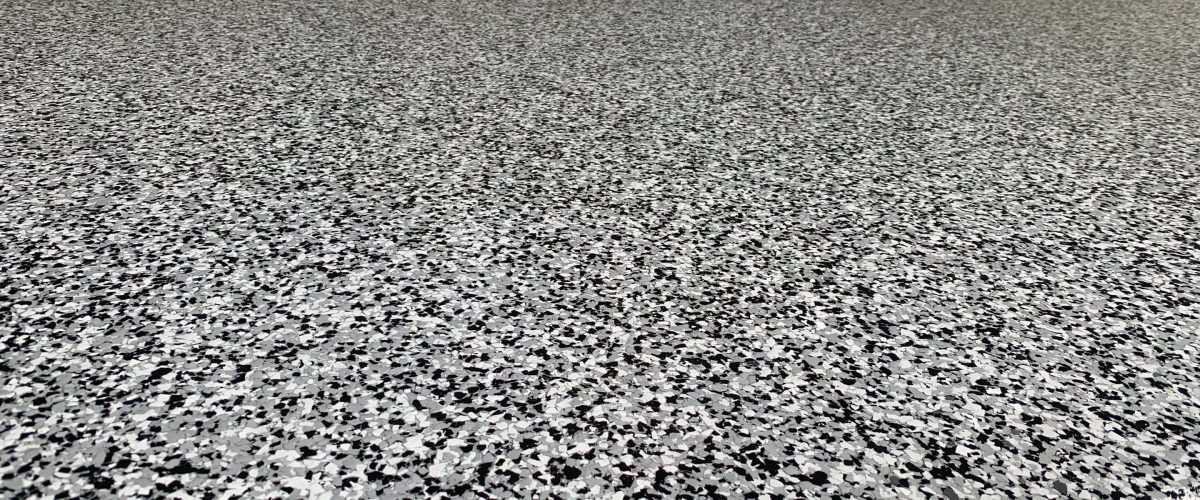
Black and white epoxy flake garage floor Guilderland Utica, NY

Do Epoxy Floors Yellow in Sunlight? The Truth About UV Damage

Bare epoxy can yellow in direct sunlight, but a professionally installed floor finished with a UV-stable topcoat resists it. The ambering people notice on an old garage or basement floor is almost always raw epoxy with no protective topcoat, or a DIY kit that skipped that layer. Standard epoxy resins are sensitive to ultraviolet light, so when UV hits them day after day they shift toward a yellow or amber tint. The fix is not to avoid epoxy, it is to cap it with a UV-stable topcoat such as a polyaspartic, which is built to hold its color in sunlight. Get that layer right and your floor keeps its true color for years, even in a sunny garage or a walkout basement.

Why Epoxy Yellows in the First Place

The color shift comes down to chemistry. Most standard epoxy is made from an aromatic resin, and aromatic compounds break down when exposed to ultraviolet light. As those bonds react to UV, the surface takes on a yellow or amber cast. This is often called ambering, and it happens gradually as sunlight builds up over weeks and months.

A few things are worth clearing up right away:

  • Yellowing is a surface issue, not a failure of the floor. The coating is still bonded and protecting the concrete; it has simply changed color.
  • It is driven by UV, not heat. A warm garage in the shade ambers far less than a cooler one that gets hours of direct sun.
  • Lighter and clear finishes show it most. A clear-coated or light gray floor reveals ambering that a dark charcoal floor might hide.

None of this means epoxy is the wrong choice. It means the topcoat matters as much as the base. Learn how the base layer works on our epoxy floor coatings page.

Where Yellowing Shows Up Most

UV ambering only happens where sunlight reaches the floor, so the risk is not the same in every room. In the Capital Region, the spots that see the most direct light are the ones to plan around.

  • Garages with the door open often or with south-facing windows that let in hours of afternoon sun
  • Walkout basements with glass doors and large windows
  • Sunrooms, patios, and porches where the coated surface sits in the open
  • Rooms with big windows that put a bright, moving patch of sun on the floor each day

A fully enclosed interior floor with little natural light has almost no UV exposure, so a standard finish there stays true. The floors that need UV-stable protection are the ones the sun actually touches.

What Actually Prevents Yellowing

The reliable answer is a UV-stable topcoat over the epoxy base. This is the layer that faces the sun, and choosing the right one is what keeps a floor from ambering.

  • UV-stable topcoats: These are formulated to resist the color shift that raw epoxy is prone to. On a professionally installed system, this protective topcoat is standard, not an upgrade you have to hunt for.
  • Polyaspartic topcoats: A polyaspartic layer is naturally UV-stable, holds its color in direct sunlight, and adds abrasion resistance on top. It is a strong pick for sunny garages and walkout basements. See how it works on our polyaspartic floor coatings page.

Epoxy Done Right finishes floors with UV-stable, moisture-resistant topcoats as part of the standard process, which is the difference between a floor that keeps its color and one that ambers in a season. Many of our sun-exposed installs use a polyaspartic finish, and it is a core part of our one-day floor coating installation

The truth in one line: Epoxy does not have to yellow. Raw epoxy left in the sun will amber, but the same floor capped with a UV-stable topcoat holds its color for years.

DIY Kits vs Professional Systems on UV

This is where most of the yellow floors come from. Big-box DIY epoxy kits are usually a single water-based epoxy coat with no UV-stable topcoat included. Rolled onto a sunny garage, that kind of floor can start ambering within a season, and there is no protective layer doing the work a topcoat should.

A professional system is built in layers: proper surface prep, a durable epoxy or hybrid base, decorative flake or color, and a UV-stable topcoat sized to the sun exposure of the space. That last layer is exactly what a kit leaves out, which is why a professionally coated sunlit floor behaves so differently over time. If you are weighing the difference for your own project, the finish and its longevity in daylight are a big part of the value.

Simple Habits That Help Any Floor

Once your floor has the right topcoat, a little routine care keeps it looking its best in a sunny space:

  •   Rinse away road salt and grit that can dull the surface over a Capital Region winter</li>
  •   Wipe up spills promptly so nothing sits and stains in a bright, warm spot</li>
  •   Use a light dust mop to keep abrasive debris off a high-gloss finish</li>
  •   Ask about a UV-stable topcoat by name for any garage, basement, or room that gets real sun</li>

Color and appearance over time is a common question for finished spaces too. If you are choosing a look for a sunlit basement, our comparison of metallic epoxy vs flake floors walks through which finish fits which room.

Do Epoxy Floors Yellow: Common Questions

Does polyaspartic yellow in the sun?

No. Polyaspartic is naturally UV-stable and holds its color in direct sunlight, which is why it is a strong topcoat choice for sunny garages, sunrooms, and walkout basements. It resists the ambering that raw epoxy is prone to and adds abrasion resistance on top.

Do interior epoxy floors yellow?

A fully enclosed interior floor with little natural light has almost no UV exposure, so a standard finish stays true over time. Yellowing is driven by ultraviolet light, so the rooms that need a UV-stable topcoat are the ones the sun actually reaches, like garages with the door open, sunrooms, and walkout basements.

Can you fix a yellowed epoxy floor?

In most cases, yes. A yellowed floor is a surface issue, not a bonding failure, so the fix is to prep the existing surface and apply a fresh UV-stable topcoat. The right approach depends on the floor’s condition, which is something we can assess during a consultation.

Want a Floor That Holds Its Color in the Sun?

If your garage door stays open all summer or your basement has walkout glass, the topcoat is the detail that decides whether your floor stays true or turns amber. Epoxy Done Right installs UV-stable epoxy and polyaspartic systems, uses premium-grade materials, and finishes every job with clean, organized job sites and a protective topcoat matched to your space.

We coat garages, basements, and patios throughout Albany, NY, Clifton Park, Saratoga Springs, and nearby Capital Region communities. Call 518-543-7699 to talk through UV-stable options and schedule a consultation.
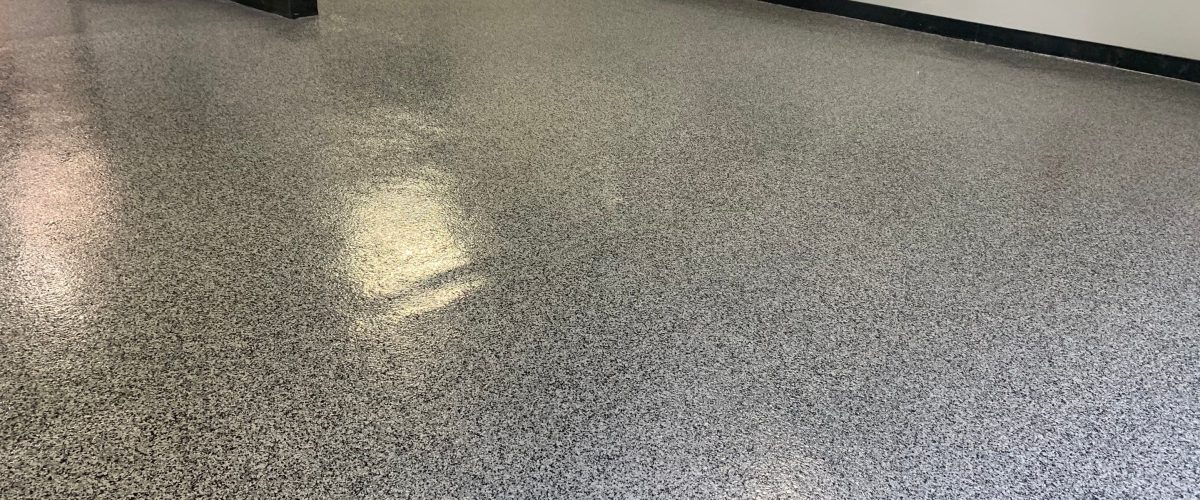

Epoxy vs Polyaspartic Garage Floor Coatings in Colonie Hague

Metallic Epoxy vs Flake Floor Coatings: Which Looks Better in a Finished Basement?

When it comes to metallic epoxy vs flake floor options, both look great in a finished basement, so the better choice comes down to how you use the space and the style you are going for. Metallic epoxy gives you a glossy, three-dimensional finish with swirls of color and depth, which reads high-end and modern and works best in a basement you want to show off. Flake epoxy gives you a speckled, textured finish that hides dust and minor slab imperfections, adds grip underfoot, and stands up to heavy day-to-day use. For a media room, home bar, or basement office in the Capital Region, metallic usually wins on pure looks. For a gym, playroom, laundry, or all-purpose basement, flake tends to be the smarter pick. Many homeowners in the Albany area split the difference and use each system in the room that fits it best.

Metallic Epoxy vs Flake Floor Coatings at a Glance

FeatureMetallic EpoxyFlake Epoxy
LookGlossy, marbled, three-dimensional depthSpeckled, textured, decorative chips
Style fitModern, dramatic, showpiece spacesVersatile, casual to polished
Hides imperfectionsShows more of the slab surfaceExcellent at masking flaws and dust
Slip resistanceSmoother; add-on texture availableBuilt-in grip from the flake texture
Best roomsBar, media room, office, display areaGym, playroom, laundry, storage
MaintenanceSimple; shows dust on the glossVery forgiving between cleanings

Metallic Epoxy in a Basement: The Showpiece Look

A metallic epoxy basement floor is what you choose when you want the floor itself to be a feature. Metallic pigments move through the coating during installation, so no two floors come out the same. You get flowing patterns, color shifts, and a wet, reflective depth that can mimic polished stone, water, or molten metal depending on the blend.

Metallic finishes shine in finished basements built for entertaining and relaxing:

  • Home bars and lounges where the reflective gloss plays off lighting
  • Media and theater rooms that benefit from a rich, dark, dramatic base
  • Home offices and studios that want a clean, upscale, modern feel
  • Display and hobby spaces where the floor doubles as a design element

The tradeoff is that a high-gloss metallic surface is smoother and shows dust and footprints more readily than a textured floor, so it rewards a basement that stays fairly tidy. If you love the look but want more grip, a non-slip additive can be worked into the topcoat. You can see the full range of blends on our metallic epoxy floor coatings

Flake Epoxy in a Basement: The Practical Favorite

A flake epoxy basement floor uses decorative vinyl chips broadcast into the coating, then sealed under a clear topcoat. The result is a durable, speckled surface that reads clean and finished while doing a lot of practical work behind the scenes. Flake is the choice most Capital Region homeowners reach for when the basement earns its keep every day.

Flake systems are a strong fit for hard-working finished basements:

  • Home gyms that see dropped weights, sweat, and rolling equipment
  • Playrooms and family spaces where grip and durability matter
  • Laundry and utility zones that stay cleaner with a forgiving surface
  • Multi-use basements that combine several of the above

The flake texture hides dust, dirt, and small slab imperfections between cleanings, and the built-in grip helps on stairs and near sinks or laundry hookups. You also get a wide palette of flake blends to match trim, cabinetry, or a specific color scheme. Compare blends on our flake floor coatings

The short version:  Metallic epoxy is the head-turner. Flake epoxy is the workhorse. Pick metallic when the floor is part of the show, and flake when the basement needs to take a beating and still look good

What Upstate NY Basements Add to the Decision

Basements in the Albany, Saratoga, and greater Capital Region carry a few local realities worth planning around. Seasonal humidity, spring moisture, and the temperature swings that come with Upstate NY winters all put a slab through more than a main-floor room ever sees. That makes surface preparation and moisture handling matter as much as the finish you pick.

Both metallic and flake systems perform well below grade when the slab is properly ground, repaired, and coated with the right moisture-tolerant base. Flake floors have a small edge for basements prone to occasional dampness or spills near mechanicals, since the texture keeps footing sure even when the floor is not bone dry. A well-installed metallic floor handles the same conditions beautifully as long as the prep is done right and the space is used the way a showpiece floor should be.

Either way, the coating you see on top is only as good as the concrete work underneath it. Start with our basement floor coatings

Maintenance, Longevity, and Appearance Over Time

Both systems are built to last for years of normal basement use, resist stains and abrasion, and wipe clean with routine care. The difference shows up in daily upkeep and how each ages visually.

  • Metallic epoxy: Keeps its dramatic gloss with regular dust mopping and occasional damp cleaning. Because the surface is reflective, it looks its best when kept clear of grit and clutter.
  • Flake epoxy: Forgives longer stretches between cleanings, since the texture and color variation disguise dust and light wear. It is the easier floor to keep looking good with a busy household.

Color stability is another common question, especially for basements with big windows or walkout doors that let in daylight. If UV exposure and long-term color are on your mind, our guide on whether epoxy floors yellow in sunlight walks through what actually causes it and how the right topcoat protects the finish.

Metallic Epoxy vs Flake Floor Coatings: Common Questions

Is metallic or flake epoxy better for a basement?

It depends on how you use the room. Metallic epoxy is the better pick for showpiece spaces like home bars, media rooms, and offices where you want a glossy, high-end look. Flake epoxy is the better pick for hard-working rooms like gyms, playrooms, and laundry areas where grip and durability matter most.

Does metallic epoxy hide imperfections in a basement floor?

Not as well as flake. A metallic finish is smoother and more reflective, so it shows more of the slab surface along with dust and footprints. Flake epoxy is the stronger choice when you want to mask minor slab flaws and keep upkeep low between cleanings.

Do metallic and flake epoxy floors hold up in Upstate NY basements?

Yes. Both systems perform well below grade when the slab is properly ground, repaired, and coated with a moisture-tolerant base. Flake has a slight edge in basements prone to occasional dampness because its texture keeps footing sure even when the floor is not fully dry.

Talk Through Your Basement Floor With a Local Specialist

Not sure whether a metallic showpiece or a hard-wearing flake floor fits your space? Epoxy Done Right installs both, and we will walk your basement, look at how you use it, and recommend the system that matches your goals and your slab. Our team is known for meticulous surface prep, premium-grade materials, and clean, organized job sites from start to finish.

We coat finished basements throughout Albany, NY, Clifton Park, Saratoga Springs, and nearby Capital Region communities. Call 518-543-7699 to talk through metallic vs flake options and schedule a consultation.