
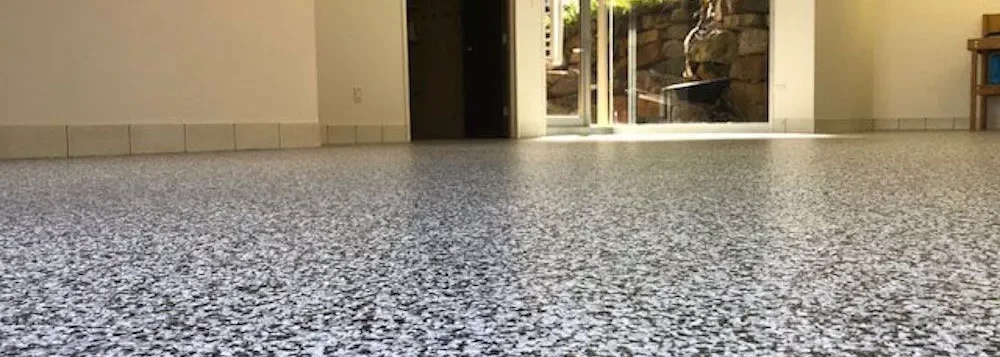
Yes, a driveway coating can survive Northeast freeze-thaw, but only when the right system goes over sound, properly prepped concrete. The coatings that fail here are almost always the wrong product, a brittle DIY epoxy, or a coating rolled over a cracked, moisture-heavy slab that was never repaired first. The ones that last use a flexible, UV-stable, moisture-tolerant system such as a polyaspartic or polyurea, installed after the concrete is ground, crack-repaired, and confirmed to be in good shape. Get the slab and the system right and your driveway holds its color and bond through years of Upstate NY winters. Skip the prep or use a big-box kit and it will peel by spring. So the honest answer is that it depends far more on how the driveway is coated than on whether driveways can be coated at all.
What Freeze-Thaw Actually Does to a Driveway
Freeze-thaw is the single hardest thing a Northeast driveway deals with. Water works into the concrete and into any coating flaws, then freezes. As it freezes it expands, pushing against everything around it. When it thaws, it contracts. In the Capital Region that cycle can repeat dozens of times over a single winter, and each round pries at any weak point.
For a coated driveway, that pressure attacks in a few specific ways:
- Under the coating: Moisture trapped below a non-breathable coat freezes and pushes the coating off the slab
- At cracks and edges: Water gets into unrepaired cracks, freezes, and lifts the coating from the weak spot outward
- Through rigid films: A brittle coating cannot flex with the concrete’s tiny seasonal movements, so it cracks and delaminates
None of this means a driveway cannot be coated. It means the coating and the prep have to be built for exactly this stress.
Why Some Driveway Coatings Fail
When people say driveway coatings do not last in the Northeast, they are usually describing one of a handful of avoidable mistakes rather than a limit of coatings themselves.
- The wrong product: Standard DIY epoxy is rigid and UV-sensitive. It ambers in the sun and cracks in the cold, which is a poor match for an exposed driveway.
- No real surface prep: A coating rolled over a smooth, dirty, or sealed slab never bonds properly, so freeze-thaw peels it fast.
- Unrepaired cracks and moisture: Coating over existing cracks or a slab with moisture problems traps the exact water that freeze-thaw needs to do damage.
- Unsound concrete: A heaving, spalling, or badly settled driveway needs repair or replacement first. A coating is a finish, not a structural fix.
Fix those four things and the failure rate drops dramatically. That is the whole game.
What Makes a Driveway Coating Survive the Freeze-Thaw
A driveway coating that lasts in Upstate NY comes down to system choice and slab preparation working together. Here is what actually holds up:
- A flexible, durable system: A polyaspartic coating stays flexible enough to move with the concrete, resists UV so it will not amber outdoors, and cures fast even in cooler temperatures.
- Aggressive surface prep: Mechanical grinding opens the concrete so the coating bonds into it rather than sitting on top. See our concrete surface preparation and grinding service.
- Crack repair before coating: Existing cracks get filled and addressed first, so water has nowhere to collect and freeze. That is the point of proper concrete repair and crack filling.
- Good drainage and a sound slab: Water needs to run off, not pool. A slab in solid condition gives the coating a stable base through every freeze-thaw cycle.
The bottom line: Driveways do not fail because they got coated. They fail when the wrong coating goes over concrete that was not prepped or repaired. Do both right and the freeze-thaw stops being the enemy.
Is Your Driveway a Good Candidate?
Not every driveway is ready for a coating on day one, and an honest answer up front saves you money. A driveway is a strong candidate when the concrete is structurally sound, reasonably level, and free of major heaving or deep spalling. Minor cracks and surface wear are normal and get handled during prep.
A driveway needs attention first when it shows serious settling, large sections of crumbling concrete, or ongoing moisture and drainage problems. In those cases, repair or resurfacing comes before any coating so the finish has something solid to bond to. The best way to know which camp your driveway falls into is a look at the actual slab. Start with our driveway coatings service to see how the full system comes together.
Driveway Coating and Freeze-Thaw Questions
Is polyaspartic better than epoxy for a driveway?
For an exposed Northeast driveway, yes. Polyaspartic stays flexible enough to move with the concrete through freeze-thaw cycles, resists UV so it will not amber in the sun, and cures fast even in cooler temperatures. Standard epoxy is more rigid and UV-sensitive, which makes it a poor match outdoors.
Can you coat a cracked driveway?
Often, yes. Minor cracks and surface wear are normal and get filled and addressed during prep. A driveway with serious settling, large crumbling sections, or ongoing moisture problems needs repair or resurfacing first, so the coating has a sound base to bond to.
How long does a driveway coating last in the Northeast?
A properly installed flexible system over sound, well-prepped concrete holds its color and bond through years of Upstate NY winters. Longevity comes down to the system choice and the prep. The wrong product or skipped prep is what leads to peeling by spring.
Coat Your Driveway to Handle Upstate NY Winters
A driveway coating is worth doing when it is done right, and the difference is in the system and the prep. Epoxy Done Right uses flexible, UV-stable polyaspartic systems, grinds and crack-repairs every slab before coating, and finishes with clean, organized job sites and premium-grade materials built for Northeast conditions.
We coat driveways throughout Albany, Clifton Park, Saratoga Springs, and nearby Capital Region communities. Call 518-543-7699 to have us look at your driveway and recommend the right approach.