
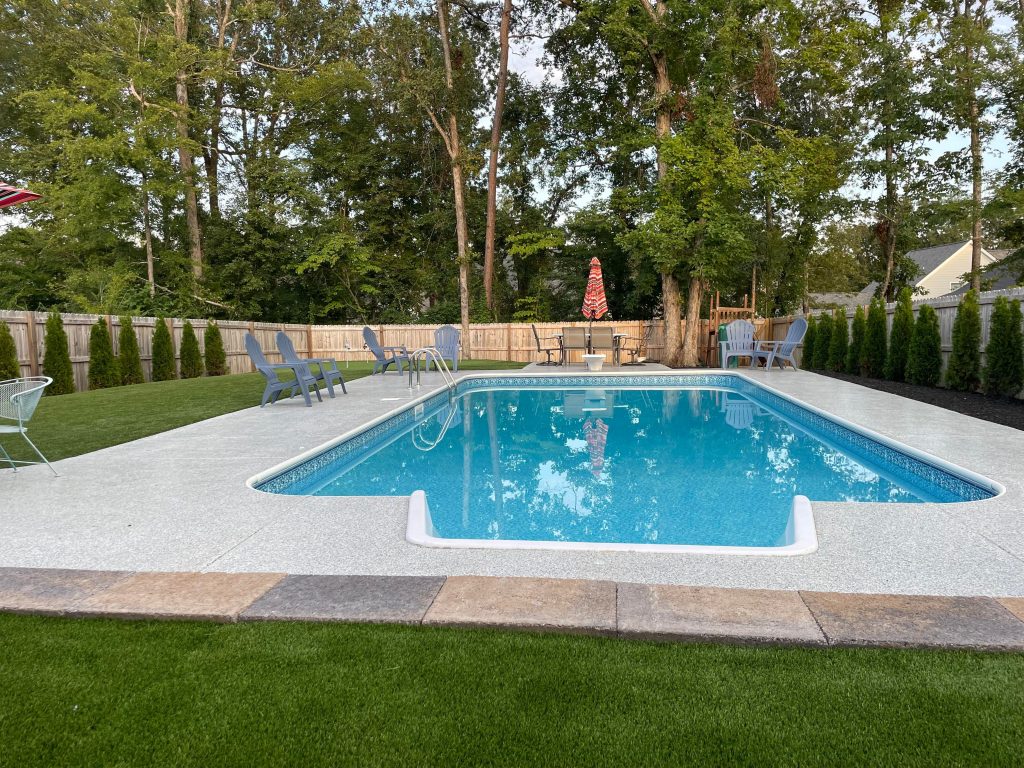
A pool deck in Albany has to survive a lot. Direct UV all summer, pool chemistry every weekend, freeze-thaw cycles all winter, road salt drift from the driveway, and the weight of furniture, planters, and people. The coating that handles all of that without yellowing, cracking, or turning slick is a polyaspartic-topped flake or quartz broadcast system installed over diamond-ground concrete. It is UV stable, flexible enough to move with freeze-thaw, slip-resistant when wet, chemical-resistant against chlorine and salt water, and built to last 15-plus years in Capital Region conditions. Below is what an Albany pool deck has to deal with, which coating systems actually hold up, and what makes the difference between a deck that looks great in year ten and a deck that needs to be redone in year three. Call Epoxy Done Right at 518-543-7699 for a quote on your pool deck coating.
What an Albany Pool Deck Has to Survive
Pool decks in the Capital Region see five distinct stressors in a calendar year. A coating that handles four of them and fails on the fifth is not the right coating.
- Direct UV all summer. A south-facing deck in Latham can hit 130-plus degrees on a July afternoon. Standard epoxy yellows and chalks under that exposure, often within a single season.
- Pool chemistry. Chlorine, salt-water pool brine, algaecides, pH adjusters, and the splash and drip of all of it onto the deck day after day. Coatings without real chemical resistance break down.
- Freeze-thaw cycles all winter. Capital Region winters put pool decks through dozens of expansion and contraction cycles. Rigid coatings crack. Flexible ones flex.
- Road salt drift. Snow blowing in from the driveway, salt-saturated boots tracking across the deck during spring opening, salt water from a saltwater pool. All of it attacks coatings that are not chloride-resistant.
- Weight, traffic, and impact. Loungers, tables, planters full of soil, kids running, dropped flip flops, the occasional grill rolled across the deck. The coating has to take the wear without scuffing or telegraphing.
The system that handles all five at once is a flake or quartz broadcast in an epoxy base coat, sealed with a polyaspartic topcoat.
The Coating Systems That Actually Work on Capital Region Pool Decks
Polyaspartic-Topped Flake System
The most common pick for residential pool decks in Albany. Vinyl flake is broadcast into a wet epoxy base coat, then sealed with a polyaspartic topcoat. The flake provides color depth, texture for slip resistance, and visual interest. The polyaspartic locks it all in and handles the UV, chemistry, and freeze-thaw work. Best balance of look, durability, and slip resistance for most pool decks.
Polyaspartic-Topped Quartz Broadcast
For decks that need maximum slip resistance or take heavier use, quartz aggregate replaces or supplements the vinyl flake. The result is a more textured, more aggressive surface that holds traction better when soaking wet. Quartz is also more impact-resistant, which matters around outdoor kitchens, hot tubs, and high-traffic walkways.
Solid Color Polyaspartic with Aggregate
A cleaner, more modern look. One continuous color, no flake or quartz pattern, with a fine aggregate broadcast into the topcoat for slip resistance. Best for design-led pools and contemporary homes where the deck is meant to read as one quiet surface.
What Falls Short on Albany Pool Decks
- Standard single-coat epoxy yellows in months under UV, becomes brittle in cold, and cannot handle chlorine over time.
- Latex deck paints peel within a season or two from a combination of UV, pool chemistry, and freeze-thaw.
- Acrylic sealers alone offer color and some protection but no real abrasion resistance and limited slip resistance when wet.
- Anything not specifically rated for UV exposure and pool chemistry is going to fail. Read the data sheets, not just the marketing.
Why Polyaspartic Is the Right Topcoat
Three properties decide whether a topcoat survives an Albany pool deck. Polyaspartic has all three.
UV stability. Polyaspartic is an aliphatic polyurea, which is the chemistry that does not yellow under sun exposure. A deck coated in 2024 with polyaspartic looks the same color in 2030 as it did on install day. Standard epoxy ambers and fades in months.
Flexibility through freeze-thaw. Polyaspartic stays flexible at low temperatures, so when the slab moves through winter expansion and contraction, the coating moves with it. Rigid epoxy in the same conditions hairline-cracks and eventually peels.
Chemical resistance. Polyaspartic resists chlorine, salt water, pool chemicals, algaecides, sunscreen, and the occasional spilled drink. Wipe-up, no staining, no breakdown.
The full system breakdown for these and other systems lives on our epoxy flooring page.
Slip Resistance: How Texture Works on a Wet Deck
A pool deck has to keep its grip when soaking wet. That is non-negotiable, and texture is what delivers it.
There are three common texture options, from least to most aggressive:
- Fine broadcast aggregate (typically silica or aluminum oxide) added to the polyaspartic topcoat. Subtle texture, comfortable to walk on barefoot, good slip resistance for low-splash decks.
- Standard vinyl flake. Mid-range texture from the flake edges themselves. Comfortable barefoot, strong slip resistance, the default choice for most residential pool decks.
- Quartz broadcast. Heavier, more aggressive texture. Maximum slip resistance, slightly less comfortable for bare feet over long periods, the right pick for splash-heavy areas and around hot tubs.
Texture choice gets dialed in during the quote. We look at how the deck gets used, who uses it, where the splash happens, and what feels right underfoot.
Color Matters More on a Pool Deck Than Anywhere Else
A dark-colored garage floor is fine. A dark-colored pool deck in full sun can hit surface temperatures that hurt to walk on barefoot. Light and mid-tone colors stay significantly cooler.
Cool deck guidelines for Capital Region pool decks:
- Light tans, beiges, sands, light grays stay coolest underfoot
- Mid-tone grays, blues, greens stay reasonably cool
- Dark grays, browns, charcoal absorb heat aggressively
- True black can become genuinely too hot to walk on barefoot
Browse color and flake options on our color chart before your walkthrough. We can help you balance the look you want with the surface temperature you actually want underfoot in July.
A flake floor with a polyaspartic topcoat handles the heat, the chlorine, the salt, and the freeze-thaw. The right color choice handles the only other variable, which is whether you can stand on it barefoot in August.
Prep Is What Decides Whether It Lasts
Coating a pool deck is harder than coating a garage. The slab has been exposed to weather, sun, water, and chemistry for years before you ever touch it. Real prep on an Albany pool deck includes:
- Pressure washing to remove organic buildup, algae, and surface grime
- Stripping any existing sealer, paint, or coating
- Diamond grinding to a Concrete Surface Profile of 2 to 3 across the full deck and edges
- Chemical neutralization if the deck has had heavy chlorine or salt water exposure that has driven chloride into the slab
- Crack and joint repair with flexible polyurea fillers
- Moisture testing before any coating goes down, since pool decks often have high vapor pressure from below
- Detail vacuuming every inch of the slab before the base coat
A deck that has had a sealer applied annually for ten years needs more aggressive grinding than a bare concrete deck. A saltwater-pool deck needs chemical prep that a chlorine-pool deck does not. The walkthrough establishes what your specific deck needs.
Install Timing and When You Can Use the Pool Again
Best times to schedule a pool deck coating in Albany:
- Spring (late April through June). Pool is being opened, deck has been sitting under a cover or open all winter, and there is plenty of warm weather ahead.
- Fall (September into early October). Pool is closing, deck use drops off, conditions are still in the cure window.
Standard timeline for an Albany pool deck install:
- Quote walkthrough: 20 to 30 minutes
- Day-of install: typically one working day for residential decks, two for larger or multi-section decks
- Walk-on: same evening
- Pool use and full furniture load: about 24 hours after the topcoat
- Full chemical exposure cure: about 72 hours
If you are opening the pool for Memorial Day weekend, get the deck coated by mid-May. If you are coating a freshly closed deck in fall, late September works well.
Long-Term Maintenance for a 15-Plus-Year Life
A properly installed polyaspartic-topped pool deck needs almost no maintenance, but a few habits stretch its life:
- Rinse off pool chemistry with a hose after major chemical applications instead of letting it sit
- Sweep regularly during the season so silica from sand toys and sunscreen does not grind into the topcoat
- Avoid abrasive cleaners. Mild soap and water is enough.
- Pull furniture off in fall before snow piles up. Avoid concentrated point loads under heavy snow.
- Inspect annually for any cracks in the slab that have telegraphed through. Address early.
That is the whole maintenance program. No annual resealing, no waxing, no recoating every few years.
Ready for a Quote on Your Pool Deck?
Call Epoxy Done Right at 518-543-7699. We coat pool decks across Albany, Saratoga, Schenectady, Troy, Clifton Park, Latham, Guilderland, Niskayuna, East Greenbush, and nearby areas in the Capital Region. Every deck gets diamond-ground prep, real crack and joint repair, a UV-stable polyaspartic topcoat over a flake or quartz broadcast system, and our satisfaction guarantee. Quotes stay valid for three months, and financing is available if you want to spread the cost.